
Throughout 2025, governments and tourism boards worldwide have been delivering the news every digital nomad and expat dreams of hearing; they’re introducing new and more relaxed visas that make working and living abroad easier than ever. As your go-to guide for global moves, we’ve decided to round up every bit of good news we heard this year to help keep you informed of your choices if you’re considering moving abroad in 2026.
As the benefits of digital nomads and foreign skilled workers become more apparent, it seems countries are opening their minds and their doors wider and wider. 2025 was no exception, with four exciting new countries introducing a digital nomad visa, and many more expanding and relaxing existing visas and schemes to become more accommodating. Read on to find out more and discover your newest prospects for 2026.
Slovenia Is Europe’s Hottest New Digital Nomad Prospect
Slovenia has become the 17th European country to welcome digital nomads, having introduced a formal digital nomad visa in November 2025. Now, non-EU remote workers can stay for up to one year and enjoy Slovenia’s professional, political, and personal benefits.
Not only is the country considered safe, stable, and remote-work friendly, but it’s also considered a more affordable gateway to the EU than most European digital nomad destinations. From rent to food and transport, you’re going to get more bang for your buck. It’s a very attractive prospect, and that’s without mentioning the extraordinary nature on its doorstep. Its abundance of mountains, forests, and lakes makes it easy to enjoy a balanced lifestyle from summer through winter. To benefit from Slovenia’s digital nomad visa, the main requirements include an income that’s twice the average national salary (currently around €1,600) and valid international health insurance.

Moldova Is Making Eastern Europe More Accessible for Digital Nomads
As of September 2025, Moldova has also been added to Europe’s digital nomad map with a new visa program that allows stays of up to two years. It’s one of the first Eastern European countries to offer the visa, along with Estonia, Romania, and Latvia, improving prospects for greater business integration across Eastern and Central Europe.
Granted, it’s not the most attractive country to live in, in terms of wealth and political stability, but it provides better opportunities for movement for those priced out of Western Europe’s schemes, which require up to four times the average income to apply. For a Moldovan digital nomad visa, the minimum income is around €1,300. Ideal for those prioritizing affordability above all.

The Philippines Adds to Asia’s Top Digital Nomad Beach Destinations
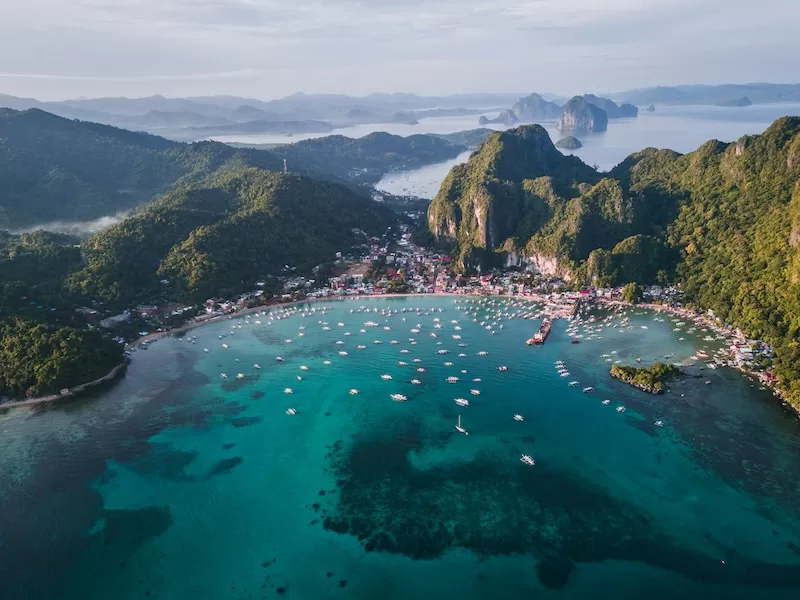
Could 2026 be the year you spend sipping coconuts and tapping on your laptop on a beach in the Philippines? Having launched a digital nomad visa in June 2025 that will allow foreigners to stay for one to two years, it’s now among Asia’s attractive line-up of remote work destinations, along with Thailand, Malaysia, and Bali.
As a less established digital nomad destination than its neighboring countries, the Philippines has the potential to attract those looking for somewhere more authentic with potential for establishing a new remote working community. What’s more, it’s attractively affordable. The minimum annual income requirement is around €20,000 / $24,000, compared to around €50,000 / $60,000 for a Balinese visa and €13,000 / $15,000 proof of savings for Thailand. Overall, it’s a very pretty new prospect for digital nomads in 2026.
Nepal’s New Digital Nomad Visa Will Be Available in Early 2026
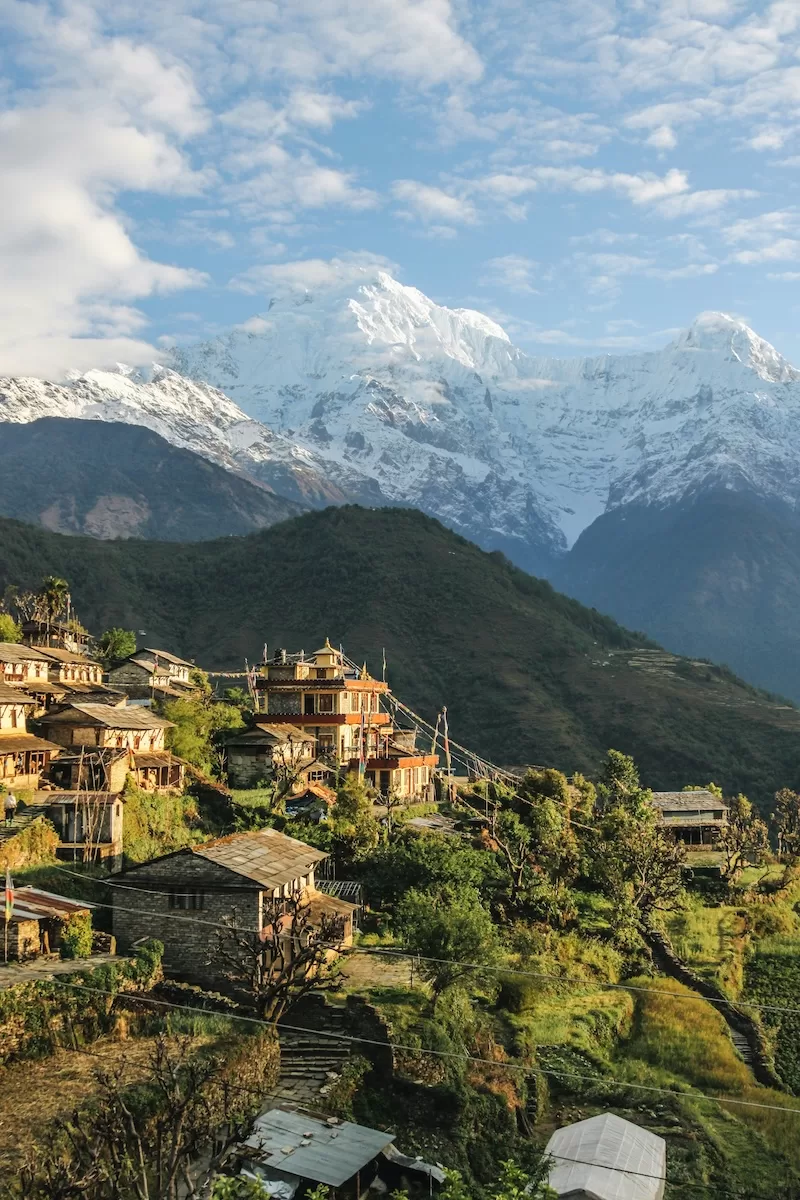
In May 2025, the Nepalese government announced plans to introduce a digital nomad visa, which is set to become available in early 2026. The visa will offer a one-year residence permit that can be renewed up to five times.
The main requirements for the visa include a $1,500 monthly income or $20,000 in savings, and a valid health insurance policy with $100,000 coverage. These relatively low requirements make Nepal one of the most accessible and appealing new destinations for digital nomads in 2026. While recent civil unrest made travelers more wary of entering Nepal, it’s generally a peaceful and affordable country with a deep sense of spirituality and natural landscapes that rival other outdoorsy digital nomad destinations. The lakeside city of Pokhara is emerging as a particular hotspot thanks to its scenery, relaxed pace, and growing coworking scene.
Canada Calls to Foreign Skilled Workers for Permanent Residency
Canada is making permanent residency easier in 2026 with new pathways for its current temporary residents and skilled workers, and a fast-track program for US H-1B visa holders. The initiative aims to reduce Canada’s temporary population to less than 5% of the total population by the end of 2027, while welcoming around 385,000 new international students and foreign skilled workers to fill its labor gaps each year.
If you have a degree and work experience in valuable sectors, then you may be eligible for the International Mobility Program (IMP) and the Temporary Foreign Worker (TFW) Program, with a clear pathway to permanent residency. Bonus points if you’re French-speaking, as Canada strives to strengthen its Francophone minority communities outside Quebec.

Thailand Rolls Out Its Long Term Resident Visa
Thailand, one of the world’s premier digital nomad destinations, is introducing new visa frameworks in 2025 and 2026 that make living and working in the country even more appealing and accessible. This includes the Destination Thailand Visa (DTV), a five-year visa that allows remote workers to stay for 180 days per year, with the possibility of a one-time 180-day extension.
The country has also added 36 countries to its visa-free program and extended the stay limit from 30 to a maximum of 60 days. What’s more, investors, skilled workers, and digital nomads can now apply for a Long Term Resident Visa, which doesn’t have any minimum income or work experience requirements. As a country with one of the longest-standing digital nomad and expat communities, this long-awaited news is a big relief for many who have settled in Thailand but relied on visa runs for many years.

Vietnamese Tourism Board Calls for Government to Introduce ‘Golden Visa’
In April 2025, the Vietnamese Tourism Advisory Board announced a proposal had been made to the government for a ‘Golden Visa’. Currently, Vietnam doesn’t offer a specific visa option to remote workers, investors, and expats for long-term stays, despite it being one of the world’s leading digital nomad destinations.
If the Golden Visa program is given the green light, foreigners could be eligible to reside in Vietnam for up to 10 years. Although visa requirements haven’t been publicly outlined, the Golden Visa’s generous time limit suggests Vietnam could be one of the most accessible countries for digital nomads in the near future.

New Zealand’s Visa Revisions Are Favoring Digital Nomads and Investors
In January 2025, New Zealand announced revisions of its visitor and NZeTA visas to allow tourists to work remotely for foreign employers and clients while visiting the country. Although they’re not exactly rolling out the red carpet for digital nomads with an official visa offer, this revision is almost as good.
Now, remote workers can work and travel in New Zealand for up to six months per year without having to prove income, health insurance, and legitimacy. As if that wasn’t enough good news, in November 2025, New Zealand announced plans to launch a Business Investor Work Visa program. This will give people the opportunity to become a permanent resident through investment or business registration. As one of the world’s most economically and politically stable countries, renowned for its high standard of living, this new opportunity could be the ticket many emigrants are looking for.
Croatia Has Extended Its Digital Nomad Visa Time Frame
In 2025, Croatia made some amendments to its digital nomad visa to refine its applicants to higher earners who intend to stay longer. The new rules require an increased minimum monthly income of €3,295 / $3,830 or proof of €60,000 / $70,000 in savings.
In return for this higher threshold, remote workers can now stay for 18 months with a possible 18-month extension, instead of 12 months with a possible six-month extension. For those who can afford it, this generous new offer greatly improves the prospect of settling in Croatia, which benefits from Schengen policies, an Adriatic climate, a growing economy, and a good quality of life.

Taiwan Is Considering Improving Its Digital Nomad Visa
In January 2025, Taiwan added itself to Asia’s impressive list of digital nomad destinations with its own digital nomad visa. This new visa allows foreign remote workers to stay and enjoy the country’s modern infrastructure and rich culture for up to six months without extension, with proof of income exceeding $20,000.
Since its initial rollout, the country is reportedly planning to extend the visa scheme and add a generous 18 months to the visa, allowing foreign remote workers to stay for up to two years at a time. This move places it as a more serious competitor among Asia’s digital nomad destinations, suggesting it’s interested in attracting professionals and investors.
Germany Offers 40,000 Foreign Skilled Workers an ‘Opportunity Card’
Throughout 2025, Germany has updated several visa schemes and policies that have provided much greater opportunities to live and work in the country. Firstly, it updated its Skilled Immigration Act to include skilled workers with appropriate vocational training and work experience, as well as degree-level workers. Secondly, it lowered its shortage-occupation Blue Card threshold to around €43,760 / $50,000 gross per year.
Thirdly, it has rolled out an ‘Opportunity Card’ that allows third-country nationals to come to Germany on a points-based visa without a job offer, to search for employment. It’s clear Germany is desperate for skilled workers, but these improved visa options, combined with its high standard of living and healthcare, make it a very attractive prospect for 2026.

Italy Plans to Offer Half a Million Work Visas to Non-EU Nationals
If the idea of living on a diet of pasta and espresso sounds appealing to you, you’ll be pleased to hear Italy plans to increase its intake of non-EU nationals by issuing half a million work visas between 2026 and 2028.
This is reportedly due to a labor shortage, population decline, and increased demand in major sectors like agriculture and tourism. As well as increasing its quota, the country has expanded its categories to include seasonal workers, remote workers, researchers, start-ups, and healthcare workers. These visa updates have made Italy a more attractive and accessible prospect for emigration in 2026 than most Schengen countries.

Cyprus Raises Its Quota of Digital Nomad Visas for 2026
In March 2025, Cyprus announced that it was reopening its window for digital nomad visa applications after reaching its initial quota of 500 visas in 2024. In October, it was announced that the quota was being raised to 1,000 visas, suggesting the sun-drenched shores of Cyprus have been popular with digital nomads and the country is benefiting from the scheme.
Although the outlook is promising, it’s hard to predict if Cyprus will continue increasing its intake in the coming years or if it will wait for a new rotation of nomads, so those considering the move should take the opportunity in 2026.
Key Takeaways
What are the best new digital nomad visas available in 2025-2026?
A: Several countries launched exciting new digital nomad visas in 2025. Slovenia became Europe’s 17th digital nomad destination in November 2025, offering one-year stays with an income requirement of around €1,600. Moldova also introduced a two-year digital nomad visa in September 2025 with a lower income requirement of €1,300, making it ideal for budget-conscious nomads. The Philippines launched its digital nomad visa in June 2025 with a minimum annual income of €20,000. Nepal will introduce its digital nomad visa in early 2026 with very accessible requirements of just $1,500 monthly income or $20,000 in savings. Taiwan added its digital nomad visa in January 2025 and is planning to extend it to two years. These new options provide diverse choices across Europe and Asia for different budgets and preferences.
Which digital nomad visas are most affordable for remote workers?
If affordability is your priority, Moldova and Nepal offer the most accessible options. Moldova’s digital nomad visa requires only €1,300 monthly income, making it one of Europe’s cheapest options. Nepal is even more budget-friendly with just $1,500 monthly income or $20,000 in savings required. In Asia, the Philippines offers good value at €20,000 annual income compared to Bali’s €50,000 requirement and Thailand’s €13,000 proof of savings. Slovenia is more affordable than most Western European destinations, with costs significantly lower than traditional digital nomad hubs. If you’re looking for the absolute lowest income requirements, Moldova and Nepal are your best bets for 2026.
What options exist for skilled workers seeking permanent residency abroad?
Several countries are actively recruiting skilled workers with clear pathways to permanent residency. Canada is making permanent residency easier with new programs for temporary residents, skilled workers, and a fast-track option for US H-1B visa holders. Germany has updated its Skilled Immigration Act and lowered its Blue Card threshold to around €43,760 annually, plus it’s offering an “Opportunity Card” for job searching without a job offer. New Zealand announced a new Business Investor Work Visa program in November 2025, allowing people to become permanent residents through investment or business registration. Italy is planning to issue half a million work visas between 2026 and 2028 for non-EU nationals in sectors like agriculture, tourism, healthcare, and remote work. These countries offer structured pathways from temporary to permanent status for qualified professionals.
Are there visa options that allow longer stays without minimum income requirements?
Yes, several countries offer flexible visa options with minimal or no income requirements. Thailand’s new Long Term Resident Visa has no minimum income or work experience requirements, making it highly accessible. New Zealand allows remote workers to stay for up to six months per year without proving income, health insurance, or legitimacy. Thailand also offers its Destination Thailand Visa (DTV), a five-year visa allowing 180-day stays with possible extension. Vietnam is proposing a “Golden Visa” that could allow up to 10 years of residence, though requirements haven’t been finalized. Croatia extended its digital nomad visa to 18 months with possible 18-month extension for those who can meet the higher income threshold. If you’re looking for flexibility without strict income requirements, Thailand and New Zealand are your best options.
Which countries are actively expanding their visa programs for expats and digital nomads?
Many countries are recognizing the value of digital nomads and skilled workers and are actively expanding their visa programs. Thailand is rolling out new visa frameworks in 2025-2026, including the extended DTV and Long Term Resident Visa. Vietnam’s Tourism Advisory Board has proposed a “Golden Visa” program that could revolutionize long-term stays. Cyprus raised its digital nomad visa quota from 500 to 1,000 visas in 2025, showing strong demand. Taiwan is planning to extend its digital nomad visa from six months to two years. Germany has updated multiple visa schemes and is actively recruiting skilled workers. Italy is planning to issue half a million work visas over the next three years. New Zealand announced new visa revisions and a Business Investor Work Visa program. These expansions indicate that countries worldwide are opening their doors wider to remote workers and skilled professionals in 2026.
About the Author
Emily Draper is an experienced travel and lifestyle writer and editor from the UK who has written for brands including Culture Trip, Hidden Compass, and tourism boards in Greenland, Luxembourg, and Copenhagen. She has travelled to over 70 countries across all seven continents, now calling Morocco her home.
Contact Author
"*" indicates required fields
Stay Ahead on Every Adventure!
Stay updated with the World News on Escape Artist. Get all the travel news, international destinations, expat living, moving abroad, Lifestyle Tips, and digital nomad opportunities. Your next journey starts here—don’t miss a moment! Subscribe Now!