As travelers (and as humans), we have a need to get things “just right.” In a room we want the right temperature, and we like our food spicy, but not too much. Travelers are no different.
Where do you want to go on vacation? Some place not too crowded, but not boring. Not too expensive either, and not too hot or cold.
Blame it on the fairy tale of Goldilocks and the Three Bears. Goldie wanted her porridge not too hot, or too cold, and her bed not too hard or too soft. So when it comes to places to consider living outside your own city or country, the Goldilocks Syndrome kicks in. And for that reason the cities of Da Nang and Hoi An, Vietnam, have become magnets for tourists and expats from all over the world.
Why Vietnam Attracts Expats
Travel blogs and magazines rate the least expensive places to live in the world, and Vietnam is usually very high on that list, sometimes number one. And in Vietnam there are a small group of cities that expats consider, everyone trying to find that “Sweet Spot.” The capital, Hanoi, is too busy for some, and the largest city, Ho Chi Minh (Saigon) is even worse, with nine million people within its limits.
There are half a dozen other options, but for those that want ocean proximity, ease of accessing an international airport, finding a large English-speaking populace (including expats and locals) Da Nang is the number one choice.
Central Vietnam has become one of the strongest expat corridors in Southeast Asia. Bali and Chiang Mai still draw crowds, but both have shifted toward tourism driven economies, with rising prices, and congestion. Da Nang and Hoi An offer something different: balance.
And it’s not always about money, although that, along with mild temperatures, are the biggest drivers for me. There are other factors to consider:
- Is there a good selection of housing?
- Are food costs reasonable, including the cost of eating out as well as groceries?
- Is it safe? And that has many definitions, but usually refers to the crime rates.
- Is the country itself safe, especially regarding any civil unrest or issues that could jeopardize a long-term stay?
- What about retirement visas?
Why Da Nang outperforms Bali and Chiang Mai:
- Lower long term housing costs
- Less congestion and pollution
- Stronger safety record
- Better infrastructure, especially internet
- A town not driven by party culture, but geared towards community
- A more predictable cost of living
- A growing but not overwhelming expat community
For expats who want ocean proximity, walkability, and a sense of “belonging,” without the chaos, Da Nang and Hoi An hit the Goldilocks zone.
Focusing on Da Nang and Hoi An
Why now? Both cities get lots of attention from retirees and remote workers, yet much of the information online confuses short-term travel budgets with long-term living realities. As a 72-year-old retired nomad, and since I’ve lived in Da Nang most of the year, I can speak to the realities of living here.
Da Nang: The City That Doesn’t Try Too Hard
Da Nang kind of sneaks up on you, and that’s what it did to me in 2024 when I came to visit for three days. We had a room in Hoi An and were unsure if we liked Da Nang enough to come back.
We did. Just by walking around and looking for lodging and getting to know the area we got hooked, so came back for two additional months.
The city does not have the frenetic energy of Ho Chi Minh City or the deep historical roots of Hanoi, so it doesn’t overwhelm you with museums or monuments. Instead, it offers something far more valuable: easy and comfortable.
It hit many of our Goldilocks needs:
- A major international airport within city limits
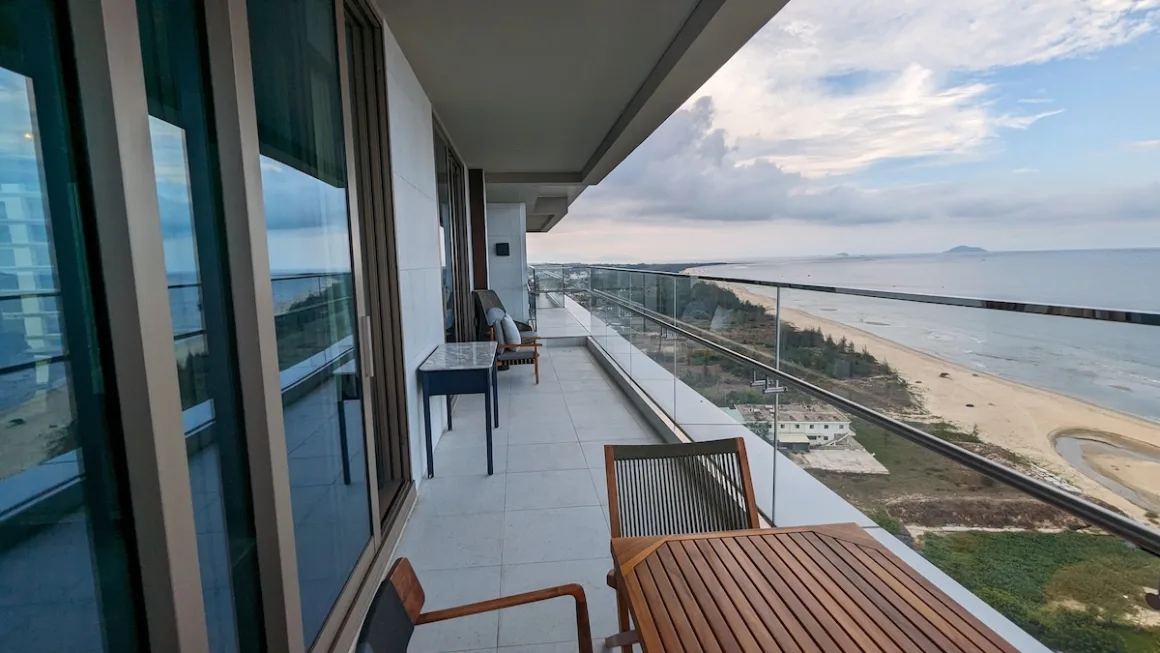
- Miles of clean, swimmable beaches
- A walkable expat district (An Thuong), which is where we stayed initially
- Affordable rent: our apartment was under $400/month in 2024
- A calm, manageable pace of life
- Enough Western food options to feel comfortable, but not overwhelmed
Da Nang is Vietnam’s fifth-largest city, but it never feels like it. The traffic is sane, and crossing the street is not like putting your life at risk, which it is in many other cities. The almost constant breeze softens the heat, and the city’s layout on the east side is very walkable, and you’re never far from the water.
Many who visit Vietnam come here to relax and unwind. Mind you, the city is growing significantly, and construction, i.e., noise, is constant. Buildings go up and come down in the blink of an eye.
The Beaches That Make You Stay
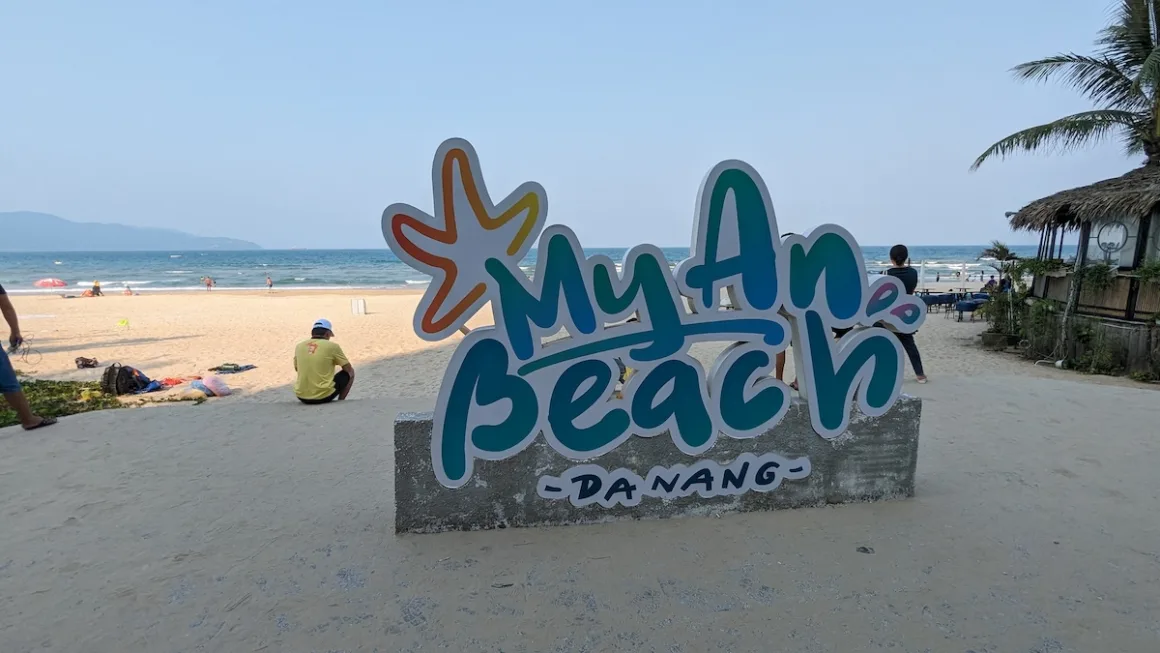
My An Beach, My Khe Beach, and the long stretch south toward the Marble Mountains are some of the most beautiful beaches in Southeast Asia. They’re not just postcard pretty, they’re used. At sunrise, thousands gather to swim, exercise, meditate, or hang out, and by 5:00 a.m., the beach is alive.
We lived three blocks from My An Beach and getting there was not a chore, but a treasure, only a few minutes away.
Da Nang highlights
I call An Thuong the “expat haven” since it has such a vast selection of Western cafés, craft beer bars, massage parlors, and boutique hotels. You can get a one-dollar banh mi or a $12 burger, depending on your mood, and English is widely spoken. Menus are bilingual, but prices do run a bit higher due to the location. Even so, the vibe is relaxed, social, and welcoming.
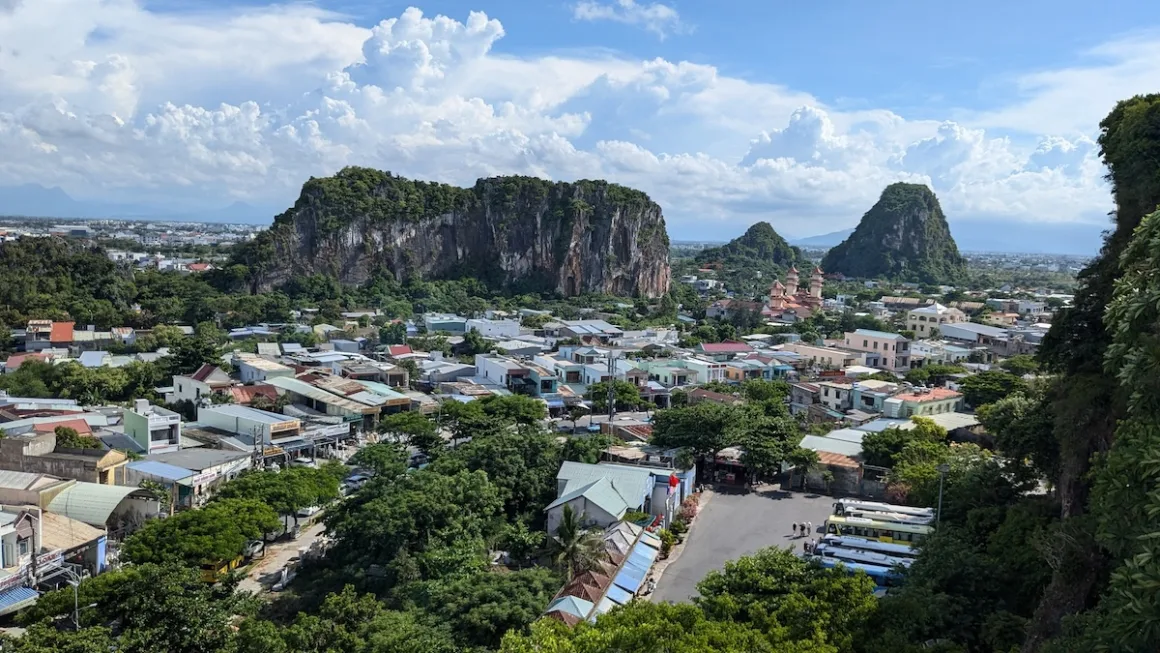
Nature is not far away from the city. Aside from the beach you have Marble Mountain a few miles to the south, which is a spiritual complex carved into limestone peaks. An hour away is My Son Sanctuary, a UNESCO site of ancient Cham temples.
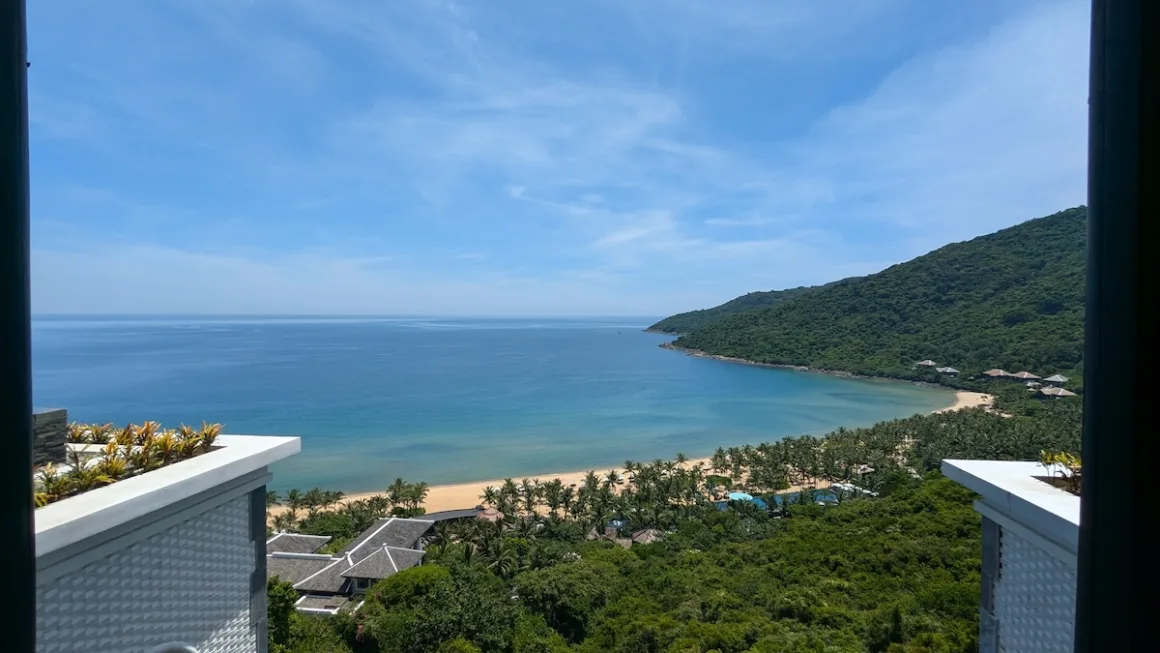
If you’re looking for an amusement park setting, Ba Na Hills is close, and tours go out continuously every day. This is the site of the Golden Bridge, held up by giant stone hands, which is an online social media favorite. Also nearby just minutes to the north is Son Tra Peninsula, home to monkeys, hidden beaches, and the towering Lady Buddha statue. You can live in Da Nang for months and still find new places to go.

The Transportation Hub of Central Vietnam
Being centrally located within the very long, narrow country makes Da Nang one of the regional hubs for trains and buses. I have taken overnight buses to the southern city of Nha Trang for less than $10, and an overnight train to Ninh Binh to the north for about $60, and that was in a private coach.
Few visitors rent cars here since the ride sharing app, called Grab, and charter buses are so cheap, as are scooters, which many rent for about $50 a month.
You can leave Da Nang at 10 p.m., sleep in a reclining bed, and wake up in Quy Nhon or Nha Trang the next morning, or jump on the train to the northern terminus in Hanoi, or the southern one in Ho Chi Minh.
For slow travelers, this is gold.

Why Expats Choose Da Nang
Ask expats why they live here and you’ll hear similar comments:
- It’s affordable without feeling cheap.
- It’s modern without losing its soul.
- It’s social without being loud.
- It’s beautiful without being pretentious.
- It’s safe, friendly, and easy.
Da Nang is the rare combination where you can live a comfortable, ocean-close lifestyle on a modest budget, yet still feel connected to a community. There is no lack of social life, with clubs, social groups, fitness communities, and co-working spaces everywhere.
Hoi An: The Ancient Town That Feels Like a Dream
Just 30 minutes south is Hoi An, which is often spoken about at the same time as Da Nang since they are so close. But even though it’s close, it’s a whole new world. Whereas Da Nang is often considered a place to live if you want to be “in the thick of things,” Hoi An is more personal, and one where you go to get away. But that comes with a caveat.
Many travel magazines have called Hoi An “A Hidden Gem,” but it is not hidden very well, and draws visitors worldwide, especially from other Asian countries.
Hoi An is what is called an “Ancient City,” a UNESCO time capsule, and has one of the best-preserved trading ports in Asia. It was active in the 15th to 19th centuries, and still retains much of the architecture, customs, and cultural layers from long ago.
Walking through Ancient Town at night is like stepping into a fairy tale, with lanterns adorning the riverwalk and boats drifting by with tourists. It is lively, quite crowded, but not so much to take away the treasure chest of uniqueness.
It’s romantic, and hosts many wedding ceremonies, as well as spiritual retreats. The lantern boats travel up and down the Thu Bon and Hoai Rivers at night, each carrying small candles that flicker against the current. It’s touristy, but it’s also magical.
Hoi An also has a beach area called An Bang Beach, just ten minutes outside town. I consider it one of the most relaxed beach villages in Vietnam, with a local, intimate vibe. It’s much quieter than Da Nang, more artistic, and ideal for travelers who want a blend of beach life and cultural immersion.
Why Expats Love Hoi An
Hoi An attracts a different type of expat than Da Nang, and caters to the creatives who appreciate the artistry in the town, and retirees who enjoy the slower pace. Digital nomads seem to also like the quieter environment, but there are more than enough beer bars and music venues to satisfy the night lifers. Da Nang, even as small as it is, can get overwhelming, so many like Hoi An for long term stays.
The town is exceedingly walkable and pleasant most times of year, and there are craft and coffee shops to while away the time. The town just begs for selfies and Instagram influencers since so much of the town is unique and photogenic. It’s more of a small, intimate village with a great food culture!
Hoi An’s cuisine is legendary, with Cao lầu being unique to the area, made with water from ancient wells, as well as White rose dumplings. Being sea proximate also brings in fresh seafood to rival anywhere in the country, as well as your traditional Banh mi sandwiches.
Which One Do You Choose?
For those wanting a more active city, more vibrant, with options, Da Nang is the better choice, but for those looking for some peace and quiet, I opt for Hoi An.
The Hard Numbers: A Real Monthly Budget
There is a big difference in prices between long-term stays vs short, especially with rent that goes beyond 30 days.
Housing: Long term leases (6 to 12 months):
- Studio or 1 bedroom apartment: $250 to $450
- Modern 1 bedroom near My An Beach: $350 to $550
- 2-bedroom apartment: $450 to $700
- Villas in Hoi An or Da Nang: $700 to $1,200
Airbnb pricing would be higher, though does not include any deposits, which are usually 1 month’s rent.
Utilities:
- Electricity spikes in summer due to air conditioning, and in most months it would run $30 to $50, and $70 to $120 in hot weather. Water and internet (some of the best in Asia) are typically included, but otherwise run about $20 a month.
Food and living costs:
- Local markets, AKA “wet markets” are extremely affordable, and where I get all my vegetables and fruit.
- Dinner out for two can easily be had for $15 for Western food, about half that for local food, and that old standard, coffee, runs about $1 to $3. You can easily eat breakfast for less than $2.
- Single expats can live like a local for $1,200 a month, and more extravagantly for less than $2,000.
- Couples would run $1,800 for a studio or one bedroom, and go up depending upon your needs.
- Healthcare and doctor visits are inexpensive, and dental cleaning can be done for $12 USD.
The “Visa Issue”
This is the biggest hangup for retirees since Vietnam does not have a specific retirement visa, so most use the standard 90-day entry which requires an exit after three months. The workaround is a visa run, generally to Laos and back, an all-day affair which runs about $150. I personally look at the restriction as being an opportunity to take a mini vacation somewhere different every 90 days.
Temporary Residency Visas are available as well for those that will do the work involved.

Insider Tips: The Best Time to Visit and Stay
Da Nang and Hoi An have two main seasons; dry season from February to August, and the rainy season, which is September to January. Excessive rain and flooding is an annual event, and Hoi An floods occasionally. It’s part of its charm, but something to be aware of.
Both cities are extremely safe and petty theft is rare, violent crime is almost nonexistent. The biggest danger is crossing the street, but Da Nang is far easier than Hanoi or Saigon.
The Da Nang hot spots include My An and My Khe beach area, and the An Thuong Walking Streets. In Hoi An it depends on whether you like the closeness of things to do, or want to get away. And you can have both. Ancient Town is good for short stays, An Bang Beach for longer. Western food is available at both places, and you will never suffer from lack of choices!
Vietnam is full of incredible places: Ninh Binh, Ha Long Bay, Quy Nhon, Can Tho, Da Lat. But Da Nang and Hoi An are the ones that feel like home.
Not because they’re perfect. But because they’re balanced, and sometimes, that’s all you need.
Living in Da Nang: Common Questions
How much does it cost to live in Da Nang?
The author puts a single person at about $1,200 a month living like a local, and under $2,000 living more comfortably. A couple spends about $1,800. A studio or one-bedroom on a long lease costs about $250 to $450 a month.
Does Vietnam have a retirement visa?
No. Most retirees use the 90-day e-visa and leave the country before it runs out, often with a short trip to Laos. A temporary residence card needs a work permit, an investment or Vietnamese family ties, not retirement alone.
Is Da Nang or Hoi An better to live in?
Da Nang suits people who want a city, long beaches and an international airport. Hoi An is about 30 minutes south and suits people who want a quieter, walkable town, with An Bang Beach nearby. Since July 2025, Hoi An is officially part of Da Nang city.
When is the rainy season in Da Nang and Hoi An?
Roughly September to January. Flooding happens most years, and Hoi An’s old town floods now and then. The dry season runs from about February to August.

About the Author
Norm Bour is an American travel writer and full-time nomad who began exploring the world at 62. Having visited 46 countries, he now considers Vietnam his home, with Da Nang among his favorite destinations for long-term living.
Contact Author
"*" indicates required fields
Stay Ahead on Every Adventure!
Stay updated with the World News on Escape Artist. Get all the travel news, international destinations, expat living, moving abroad, Lifestyle Tips, and digital nomad opportunities. Your next journey starts here—don’t miss a moment! Subscribe Now !
As travelers (and as humans), we have a need to get things “just right.” In a room we want the right temperature, and we like our food spicy, but not too much. Travelers are no different.
Where do you want to go on vacation? Some place not too crowded, but not boring. Not too expensive either, and not too hot or cold.
Blame it on the fairy tale of Goldilocks and the Three Bears. Goldie wanted her porridge not too hot, or too cold, and her bed not too hard or too soft. So when it comes to places to consider living outside your own city or country, the Goldilocks Syndrome kicks in. And for that reason the cities of Da Nang and Hoi An, Vietnam, have become magnets for tourists and expats from all over the world.
If you'd like to read the full story, simply enter your email to subscribe to our newsletter.
For even more expert insights, unmissable resources, and exclusive invites, explore our premium subscription offers here.
OR
Already a Subscriber? Click here to login
Subscription required
You've reached your limit of free articles. For full access to Escape Artist, and all of our insights on travel, moving abroad, and the digital nomad life, click here to Subscribe.
Already a Subscriber? Log in here