More people are choosing longer, slower trips over short weekend breaks. Not because flights got cheaper, but because something shifted in how we think about rest. This article is about why tropical vacations work the way they do and what actually makes them worth the planning.
Why Bali Still Makes Sense in 2026
Let’s be direct. Bali is overexposed. Every travel feed has the same rice terrace shot, the same infinity pool, the same smoothie bowl. And yet — people keep coming back. Not because of the aesthetics. Because of something harder to explain.
There’s a psychological concept called Restorative Environment Theory, developed by Rachel and Stephen Kaplan at the University of Michigan. The idea is simple: certain environments allow the brain to recover from directed attention fatigue. Bali, structurally, checks every box. Fractals in nature (rice terraces, tropical canopies), reduced decision load, social permission to slow down.
That last part matters more than people admit. We need a reason to stop. Bali gives you one.
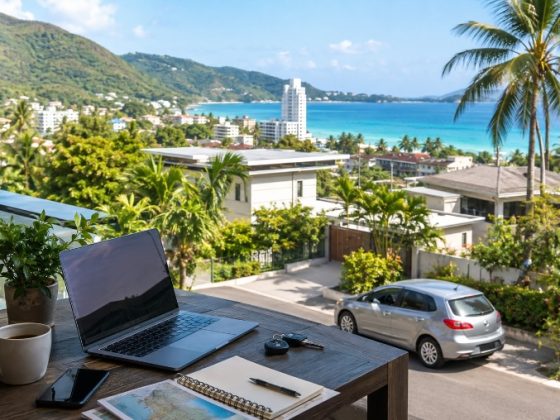
Now, the practical question: where you stay changes everything. Staying in a hotel lobby with strangers eating breakfast three feet away is a different psychological experience than having your own kitchen, your own pool, your own schedule. That’s exactly what makes something like a Bali 2 bedroom villa such a different proposition — you’re not just booking accommodation, you’re booking a rhythm.
What the Research Says About Rest
Most people arrive on vacation and spend the first two days still anxious. It’s well-documented. Cortisol doesn’t drop the moment your plane lands in Denpasar. It takes roughly 48 to 72 hours for the nervous system to actually downshift — assuming you let it.
What accelerates that process?
- Removing time pressure. Not watching the clock. Eating when you’re hungry.
- Physical warmth. Tropical heat genuinely has a sedative effect on muscle tension.
- Novel but non-threatening environments. New sounds, new smells — but no real danger. The brain logs it as stimulating, not stressful.
The mistake most people make is packing a vacation like a schedule. Three temples before noon. Cooking class at 2. Sunset at Tanah Lot at 6. That’s not rest. That’s tourism with better weather.
The Uluwatu Problem Nobody Talks About
Uluwatu is one of the best surf breaks in Bali. It’s also, for most visitors, completely wrong.
The wave breaks over a shallow reef at around 3 to 6 feet on a good day, with a left-hander that walls up fast. If you don’t know how to navigate a cave entry, if you’re not comfortable reading a reef swell, you will have a bad time. Not necessarily dangerous, but frustrating and disorienting. The crowd knows the pecking order. You won’t.
Why bring this up? Because one of the psychological pillars of a good tropical vacation is accurate expectations. Going to Uluwatu thinking it’s a gentle beach break or booking a cliffside villa assuming quiet nights — these mismatches create stress. The research on vacation satisfaction consistently shows that gaps between expectation and experience are the main driver of disappointment, not the place itself.
The Architecture of Doing Nothing
There’s a specific kind of afternoon that only happens in the tropics. It’s around 2 PM. The heat peaks. Everything slows. Even the locals go quiet.
In Bali, this is called ngaso in the informal sense — a kind of collective pause. You’re not expected to produce anything. Napping is not lazy. It’s structural.
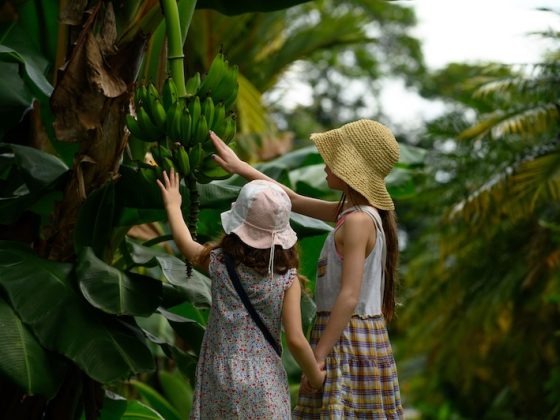
What makes villa-style accommodation uniquely suited to this is the architecture itself. Traditional Balinese compounds are built around open-air living spaces — bale pavilions, covered daybeds, transition zones between inside and outside. There’s no glass separating you from the air. You hear the rain on banana leaves from your bed. You feel the temperature shift at 5 PM when the wind comes off the Indian Ocean.
Hotels are sealed environments. They control your experience. Villas hand it back to you.
What Changes When You Have Space
Traveling with a partner or a friend? The dynamic shifts completely when you have separate rooms and shared common space. You can be alone without actually being alone. That’s not a small thing.
Couples who travel well together will tell you the ability to read in different rooms, to wake up at different times without negotiating, to cook something simple at midnight — these micro-freedoms reduce friction. Less friction, less low-grade irritation, better trip.
Here’s what villa travelers often report:

- Fewer arguments. Not because everything is perfect, but because there’s space to decompress without it becoming a conversation.
- More spontaneous meals. A market run, a local market in Seminyak or Canggu, cooking together — this creates memory better than any restaurant booking.

The Visa Situation in 2026 (Because Details Matter)
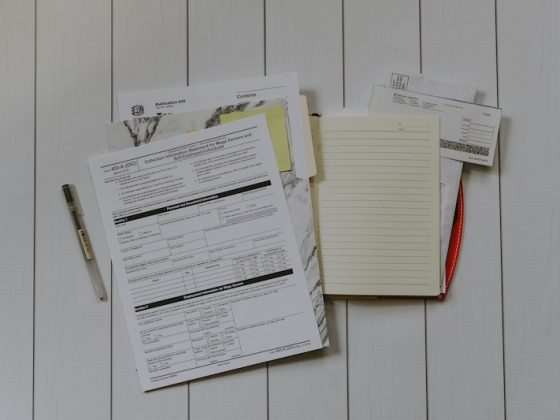
Indonesia updated its visa-on-arrival rules in early 2025, and the dust has not fully settled. As of early 2026, most passport holders from EU countries, the US, UK, and Australia can enter on a 30-day visa-on-arrival, extendable once at an immigration office for another 30 days. The total is 60 days if you do it correctly.
The newer Second Home Visa (introduced a few years ago) allows stays of up to 5 years and has attracted a specific demographic: remote workers, retirees, people who’ve decided that rotating between Canggu and wherever-they-came-from is simply better than a fixed address. It requires proof of funds and a property lease or ownership, but the threshold is not unreachable.
What this means practically: Bali is no longer just a two-week destination. For some people, it’s a base. The psychology of a vacation changes when the trip is long enough to have its own routine.
The Food Variable
Nobody talks about this enough. The food in Bali is, nutritionally and psychologically, well-suited to a reset.
Fresh coconut water has more electrolytes than most sports drinks. A proper nasi campur from a warung (rice, tempeh, vegetables, sambal) is balanced in a way that processed hotel food isn’t. You eat lighter. You sleep better. You wake up without the weight of a heavy dinner.
The warung economy is also a social leveler. You sit at a plastic table. You point at what you want. No menu in four languages. No decision fatigue. This kind of simplicity is underrated.
Avoid the tourist-facing smoothie bowl places in Seminyak for everyday eating. Walk two streets back. Find the place with no English signage. Your digestion and your wallet will both thank you.
The Psychology of Coming Back Right
The end of a vacation matters more than most people account for. Flying home on the last evening, arriving at midnight, back at the desk by 9am — that’s a design failure.
Build in a buffer day. One day at home before returning to work. Unpack properly. Sleep in your own bed. Let the transition be a transition, not a collision.
The travelers who report the highest post-vacation satisfaction — studies from the University of Rotterdam on this subject go back over a decade — are consistently those who planned the return with the same intentionality as the departure.
Final Thoughts
There’s no universal formula here, because the mind that needs rest in February after a difficult quarter is different from the mind that needs stimulation after six months of remote work isolation.
But the fundamentals hold. Space matters. Time matters. Expectation management — perhaps most of all — matters. Go to Bali for what it actually is: a dense, complex, genuinely beautiful island with good food, real culture, and specific conditions that reward the informed and patient traveler.
Go with enough time to get bored once or twice. That boredom is the point.
Contact Author
"*" indicates required fields
Stay Ahead on Every Adventure!
Stay updated with the World News on Escape Artist. Get all the travel news, international destinations, expat living, moving abroad, Lifestyle Tips, and digital nomad opportunities. Your next journey starts here—don’t miss a moment! Subscribe Now !
More people are choosing longer, slower trips over short weekend breaks. Not because flights got cheaper, but because something shifted in how we think about rest. This article is about why tropical vacations work the way they do and what actually makes them worth the planning.
Why Bali Still Makes Sense in 2026
Let’s be direct. Bali is overexposed. Every travel feed has the same rice terrace shot, the same infinity pool, the same smoothie bowl. And yet — people keep coming back. Not because of the aesthetics. Because of something harder to explain.
If you'd like to read the full story, simply enter your email to subscribe to our newsletter.
For even more expert insights, unmissable resources, and exclusive invites, explore our premium subscription offers here.
OR
Already a Subscriber? Click here to login
Subscription required
You've reached your limit of free articles. For full access to Escape Artist, and all of our insights on travel, moving abroad, and the digital nomad life, click here to Subscribe.
Already a Subscriber? Log in here