Southern Birthing Grounds
Just about everyone with adventure in their soul dreams of experiencing an Africa safari. But Africa is a very big place.
You see, the average person has little if any grasp of just how large Africa is. On the map of the world we’ve seen all our lives, it doesn’t look that enormous.
Yet depicting a 3D round world on a 2D flat map incurs massive distortions, especially with the traditional Mercator projection above, where lines of latitude are straight, not curved, so that Russia looks gigantic and Africa looks smaller and squat.
Believe it or not, you can fit Russia (the world’s largest country at 17,100,000 square kilometers), Canada (the second largest at 9,985,000), and Greenland (the largest island at 2,167,000) – all three together at 29, 252,000 – into Africa with room left over: Africa is 30,370,000.
That’s distortion! Greenland, for example, is the same size as Saudi Arabia (2,150,000).
Africa is gigantic – plus it has a bewildering number of countries. There are 50 in all, counting de facto sovereign Somaliland. (The African Union has 55 member states, but 5 are island states far offshore.) I’ve had the good fortune to have been to every one.
Each one is interesting and distinct in its own way. Yet when most people think of traveling to Africa, they dream of having a safari (Swahili for “journey”) to witness Africa’s iconic animals in the wild.
Where the Journey Narrows
Ironically, in all of Africa’s enormous vastness, the number of regions where you can do this is surprisingly small. To see a real abundance of animals with experienced safari operators, there are basically only five out of those 50 countries – Kenya, Tanzania, Zambia, Botswana, and Namibia.
I’d add South Africa, but frankly, it’s not safe anymore with rampant crime. Mozambique is trying to make a go of it, while Uganda and Rwanda are where you go to see gorillas ( if you need to choose, pick Rwanda). Some might add Zimbabwe, but right across the Zambezi River is Zambia, which is way better.
That said, the iconic Africa safari most everyone dreams of is to the Serengeti of Tanzania. Especially during the Great Migration, when the vast herds of wildebeest, zebra, and gazelles are strung out mile after mile migrating from Tanzania’s Serengeti to the Masai Mara of Kenya from May through July.
A Secret Season
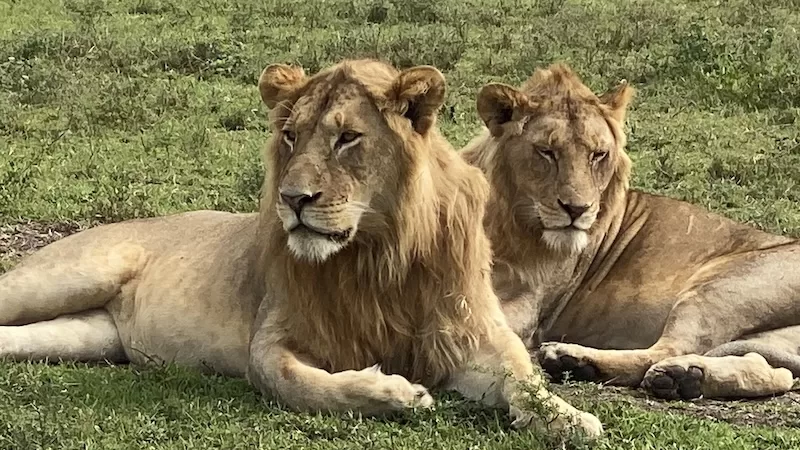
What most everyone doesn’t know is in addition to those vast herds are vast swarms of tourist-laden jeeps. You never have the animals to yourself – there’s always ten jeeps around one lion. It’s called overtourism, and it’s really a bummer.
How do you avoid this? Let’s start with how the migration works. It’s circular: north from the Serengeti to the Mara, May to July, and starting in October, the herds return going south.
But return to where? And from where do the great herds start the cycle anew? The answer is the Short Grass Plains of the Serengeti’s far south. It is here where, from January through March, over a million wildebeest congregate en masse, not strung out over a hundred miles. For this is their Birthing Season when the herds are replenished with new life.
Life Begins Here
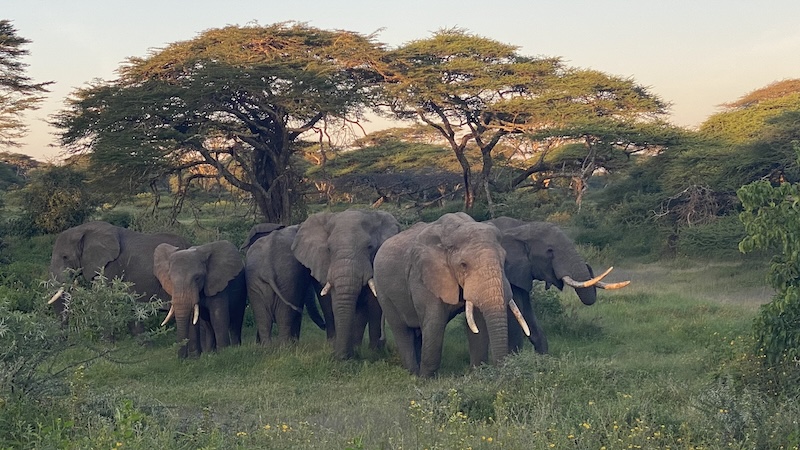
A Serengeti Birthing Season Safari is unimaginably spectacular. It is by far Africa’s, indeed the world’s, greatest wildlife extravaganza, yet it remains unknown to all but the most experienced African cognoscenti.
In late winter–early spring, all the animals are in one place, giving birth to and caring for their calves and cubs. Imagine being on a hilltop enjoying a bush breakfast with 100,000 wildebeest on the plains below, while the great predators decide which ones are for dinner.
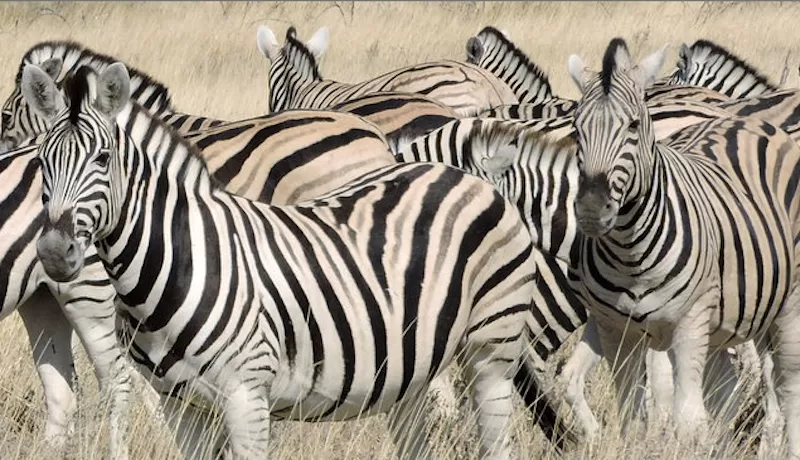
What matters most is what you actually see, learn, and experience amidst this spectacle. You learn, for example, that a group of zebras is called a dazzle — because their stripes confuse, or “dazzle,” a predator from targeting a specific one of them.
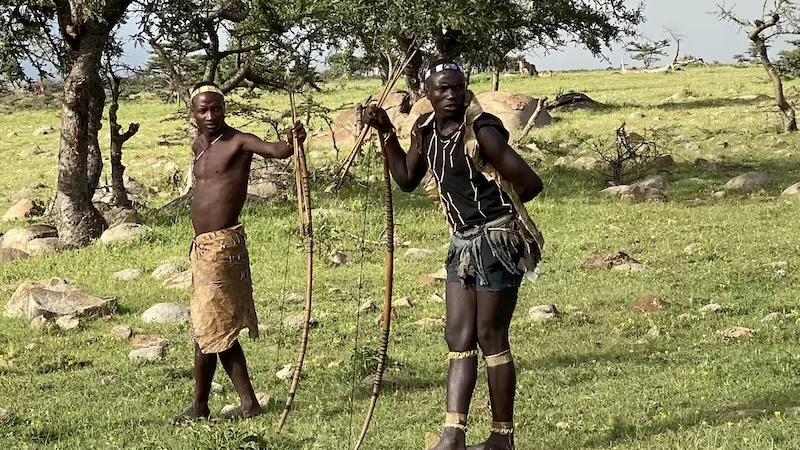
Your native guides and trackers are immensely knowledgeable about the Serengeti and its wildlife. Ideally, among them will be the Serengeti’s original inhabitants, the Hadza, known to anthologists as “The Last of the First,” the only people on Earth directly descended from the first Homo sapiens.
Your safari becomes unique as they take you through the bush, explaining their original nomadic hunter-gatherer lifestyle of countless millennia.
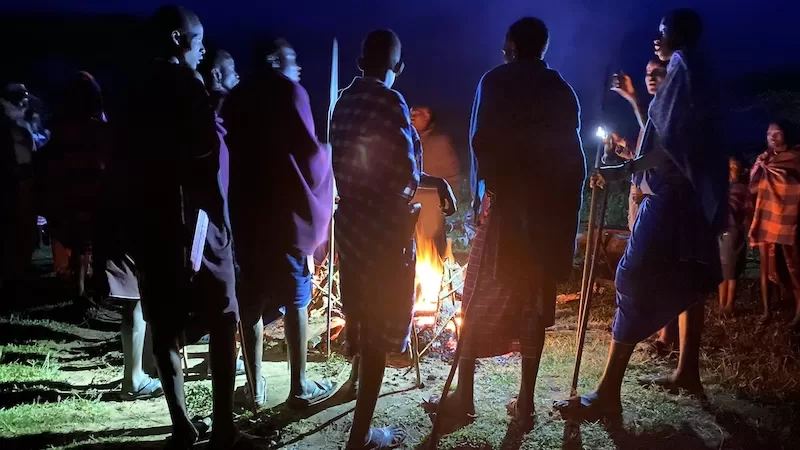
Of course, you’ll also get to know the Serengeti’s legendary Masai, who’ll guide for you, perform their famous jumping ceremony, and tell their stories around your campfire.
The Journey Continues
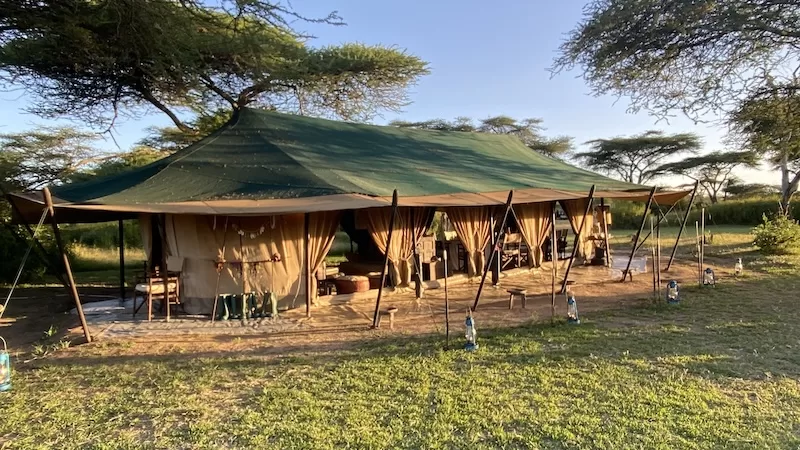
If this short collection of Serengeti glimpses has piqued your interest, for a lot more information about the Serengeti, a lot more photos, and a detailed itinerary, please see our Wheeler-Windsor Expeditions Serengeti Luxury Birthing Safari, March 8-19, 2025.
About the Author
Jack Wheeler is Escape Artist’s World Adventure Expert and has also been called the “real-life Indiana Jones” by the Wall Street Journal. He has had adventures in every country in the world: all 193 UN Member States, additionally 115 distinct territories and dependencies. He’s had two parallel careers: one in adventure and exploration with Wheeler Expeditions; the other in the field of geopolitics. He also received his Ph.D. in Philosophy from the University of Southern California, where he lectured on Aristotelian ethics.
Contact Author
"*" indicates required fields
Stay Ahead on Every Adventure!
Stay updated with the World News on Escape Artist. Get all the travel news, international destinations, expat living, moving abroad, Lifestyle Tips, and digital nomad opportunities. Your next journey starts here—don’t miss a moment! Subscribe Now !