Saudi Arabia is often thought of as backwards, and mostly sand—it even has a district called the Empty Quarter. But a multi-billion dollar push by the government of Crown Prince Mohammed bin Salman hopes to change that. The early signs are good, as tourist visits and spending ticked up last year.
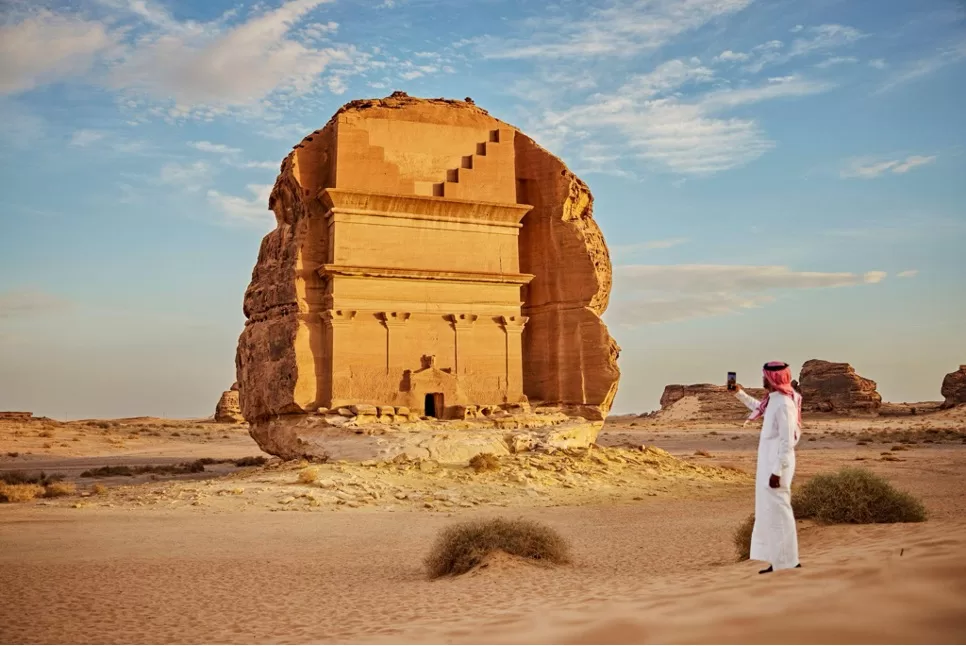
Dozens of influencers have passed through on Riyadh’s dime and highlighted some fascinating places, like UNESCO-designated Hegra and the historic Red Sea port of Yanbu. Matthew Chovanec, an academic and translator of Arabic literature, has visited the country many times. He spoke to EA about the vast changes Saudi Arabia has experienced and offered valuable insights for the discerning traveler.
Paul Osterlund: What first drew you to the Arabian Peninsula, and Saudi Arabia in particular?
Matthew Chovanec: My first trip to Saudi Arabia was back in 2012, when you couldn’t get a tourist visa to the Kingdom. Things back then were also much more in line with how people still imagine the country to be today. I was on a business trip and spent most of the time at a conference and at an international hotel. But after a long hiatus, I’ve been to Saudi Arabia semi-regularly the last few years.
The changes in lifestyle and social mores between my first visit and now is truly fascinating. But those changes have continued apace even between my trip over the last three years. Many other people have reported on these rapid cultural changes over the last few years, but as an outsider I would describe it by saying that Saudi Arabia now increasingly resembles other Arabic-speaking countries.
PO: What misconceptions about Saudi Arabia might keep people from visiting?
MC: People have an image in their mind of a Saudi Arabia that is now very outdated, that of an austere hermit kingdom. Saudi Arabia today is full of all kinds of new cultural initiatives, public investment, and young ambition. It is exciting to come back to Riyadh every six months and see the progress of construction on King Salman Park and the Metro system, to stroll along the corniche in Jeddah and see how much more comfortable people are in public. There is a real dynamism and investment in the country and it’s fun to be a fly on the wall. As someone who speaks Arabic, I have also benefited from the explosion in Saudi media, everything from podcasts to animated cartoons to buddy comedy films. If people signed on to Netflix and watched an episode of Masameer [the first Saudi animation feature film, based on a popular character] they could get a taste.
PO: The Saudi government aims to lure 100 million annual visitors by 2030. How do you evaluate the country’s potential to develop its tourism sector in the near future?
I have not only seen the publications about these goals, but have myself been encouraged by locals to visit places like al-Ula. Many of these tourist initiatives are places being built from scratch, and the architectural plans look very ambitious. They also mostly look as though they are meant to appeal to generic luxury travellers. But what I have found the most enjoyable about being a tourist in Saudi Arabia has been the smaller, non-luxurious experiences. There is nothing as enjoyable as having breakfast at a Jeddah hole in the wall and eating five different things you’ve never even heard of. If a place wants to build a tourist economy, I imagine they should start by luring those adventurous tourists who are looking for authentic local culture.
The most unfamiliar and magnificent neighborhood…I’d never seen this specific type of architecture before. Not in an Orientalist film or a Disney theme park. It was iconic without being cliche.
PO: Urban explorers might be unaware that Jeddah has a fascinating and beautiful old city, Al Balad. You’ve become enchanted with the quarter. What intrigues you about the place?
MC: On my first visit, I remember having a day off in Jeddah and walking from my hotel and wandering into the most unfamiliar and magnificent neighborhood. It was filled with all these abandoned coral buildings with elaborately carved wooden balconies. I had never seen anything like it. But the most remarkable thing was that after hours of exploring, I never once ran into a single tourist. It was probably the only time I’d ever genuinely had an authentic tourist discovery.
Balad in Jeddah is, for me, the textbook representative of that highest of all virtues for the flaneur: vernacular architecture. The main building type is a multi-story coral structure with large wooden lattice work windows, apparently typical of pre-modern trading ports on the Red Sea. I’m hoping to make it to Yanbu one day to compare! The buildings are all unique, and stunning.
While the Ministry of Tourism is quickly giving the old city a makeover, it is for now still a sleepy residential neighborhood with car-free alleyways. What I love about it is that for being a place that is so completely unique and iconic, I’d never seen this specific type of architecture before. Not in an Orientalist film or a Disney theme park. It was iconic without being cliche. As part of the collective imagination, it was completely unspoiled.
PO: What are some difficulties one might encounter traveling in Saudi Arabia, specifically in terms of laws and lack of development?
MC: I have not found Saudis in general to be ebullient or falling over themselves to welcome me as an outsider. In fact, they have treated me as a tourist in what I think is the best of all possible ways: they mostly ignored me. Things are not obvious or well-trodden or tourist-friendly and because of this I often find myself just earnestly asking people simple questions. Where do I go to place my order? Can I walk through this beach or are people trying to have private picnics with their families? Is it OK if I take a picture of this mosque?
One practical suggestion is to be careful when renting a car. I rented a car for a couple of days in the Eastern Provinces and at my business meetings heard several people boast about the Kingdom having the world’s most hi-tech system of traffic cameras. I came home to $600 in fines on my rental car.
PO: This year, Saudi Arabia’s first liquor store opened in Riyadh, and there has been much speculation about the strict ban on alcohol being relaxed. To what extent do you think this will occur and is it part of the country’s efforts to boost tourism?
MC: I could imagine Saudi Arabia making a few more carve-outs for drinking alcohol, in which case it will probably end up resembling other Arab countries, particularly those in the Gulf. That is to say, you’ll be able to get a middling, overpriced cocktail at a couple hotel bars and resorts. If they sell alcohol quietly only at these new, isolated resorts on the Red Sea coast, I think it will actually be pretty anticlimactic. The vast majority of locals aren’t going to suddenly pick up drinking. Honestly I’ve actually enjoyed the few days of forced temperance during my trips, and it’s one more way that Saudi Arabia will end up being like everywhere else.
Paul Osterlund
Contact Author
"*" indicates required fields
Stay Ahead on Every Adventure!
Stay updated with the World News on Escape Artist. Get all the travel news, international destinations, expat living, moving abroad, Lifestyle Tips, and digital nomad opportunities. Your next journey starts here—don’t miss a moment! Subscribe Now!
Saudi Arabia is often thought of as backwards, and mostly sand—it even has a district called the Empty Quarter. But a multi-billion dollar push by the government of Crown Prince Mohammed bin Salman hopes to change that. The early signs are good, as tourist visits and spending ticked up last year.
Dozens of influencers have passed through on Riyadh’s dime and highlighted some fascinating places, like UNESCO-designated Hegra and the historic Red Sea port of Yanbu. Matthew Chovanec, an academic and translator of Arabic literature, has visited the country many times. He spoke to EA about the vast changes Saudi Arabia has experienced and offered valuable insights for the discerning traveler.
Paul Osterlund: What first drew you to the Arabian Peninsula, and Saudi Arabia in particular?
Matthew Chovanec: My first trip to Saudi Arabia was back in 2012, when you couldn’t get a tourist visa to the Kingdom. Things back then were also much more in line with how people still imagine the country to be today. I was on a business trip and spent most of the time at a conference and at an international hotel. But after a long hiatus, I’ve been to Saudi Arabia semi-regularly the last few years.
The changes in lifestyle and social mores between my first visit and now is truly fascinating. But those changes have continued apace even between my trip over the last three years. Many other people have reported on these rapid cultural changes over the last few years, but as an outsider I would describe it by saying that Saudi Arabia now increasingly resembles other Arabic-speaking countries.
PO: What misconceptions about Saudi Arabia might keep people from visiting?
MC: People have an image in their mind of a Saudi Arabia that is now very outdated, that of an austere hermit kingdom. Saudi Arabia today is full of all kinds of new cultural initiatives, public investment, and young ambition. It is exciting to come back to Riyadh every six months and see the progress of construction on King Salman Park and the Metro system, to stroll along the corniche in Jeddah and see how much more comfortable people are in public. There is a real dynamism and investment in the country and it’s fun to be a fly on the wall. As someone who speaks Arabic, I have also benefited from the explosion in Saudi media, everything from podcasts to animated cartoons to buddy comedy films. If people signed on to Netflix and watched an episode of Masameer [the first Saudi animation feature film, based on a popular character] they could get a taste.
PO: The Saudi government aims to lure 100 million annual visitors by 2030. How do you evaluate the country’s potential to develop its tourism sector in the near future?
I have not only seen the publications about these goals, but have myself been encouraged by locals to visit places like al-Ula. Many of these tourist initiatives are places being built from scratch, and the architectural plans look very ambitious. They also mostly look as though they are meant to appeal to generic luxury travellers. But what I have found the most enjoyable about being a tourist in Saudi Arabia has been the smaller, non-luxurious experiences. There is nothing as enjoyable as having breakfast at a Jeddah hole in the wall and eating five different things you’ve never even heard of. If a place wants to build a tourist economy, I imagine they should start by luring those adventurous tourists who are looking for authentic local culture.
The most unfamiliar and magnificent neighborhood…I’d never seen this specific type of architecture before. Not in an Orientalist film or a Disney theme park. It was iconic without being cliche.
PO: Urban explorers might be unaware that Jeddah has a fascinating and beautiful old city, Al Balad. You’ve become enchanted with the quarter. What intrigues you about the place?
MC: On my first visit, I remember having a day off in Jeddah and walking from my hotel and wandering into the most unfamiliar and magnificent neighborhood. It was filled with all these abandoned coral buildings with elaborately carved wooden balconies. I had never seen anything like it. But the most remarkable thing was that after hours of exploring, I never once ran into a single tourist. It was probably the only time I’d ever genuinely had an authentic tourist discovery.
Balad in Jeddah is, for me, the textbook representative of that highest of all virtues for the flaneur: vernacular architecture. The main building type is a multi-story coral structure with large wooden lattice work windows, apparently typical of pre-modern trading ports on the Red Sea. I’m hoping to make it to Yanbu one day to compare! The buildings are all unique, and stunning.
While the Ministry of Tourism is quickly giving the old city a makeover, it is for now still a sleepy residential neighborhood with car-free alleyways. What I love about it is that for being a place that is so completely unique and iconic, I’d never seen this specific type of architecture before. Not in an Orientalist film or a Disney theme park. It was iconic without being cliche. As part of the collective imagination, it was completely unspoiled.
PO: What are some difficulties one might encounter traveling in Saudi Arabia, specifically in terms of laws and lack of development?
MC: I have not found Saudis in general to be ebullient or falling over themselves to welcome me as an outsider. In fact, they have treated me as a tourist in what I think is the best of all possible ways: they mostly ignored me. Things are not obvious or well-trodden or tourist-friendly and because of this I often find myself just earnestly asking people simple questions. Where do I go to place my order? Can I walk through this beach or are people trying to have private picnics with their families? Is it OK if I take a picture of this mosque?
One practical suggestion is to be careful when renting a car. I rented a car for a couple of days in the Eastern Provinces and at my business meetings heard several people boast about the Kingdom having the world’s most hi-tech system of traffic cameras. I came home to $600 in fines on my rental car.
PO: This year, Saudi Arabia’s first liquor store opened in Riyadh, and there has been much speculation about the strict ban on alcohol being relaxed. To what extent do you think this will occur and is it part of the country’s efforts to boost tourism?
MC: I could imagine Saudi Arabia making a few more carve-outs for drinking alcohol, in which case it will probably end up resembling other Arab countries, particularly those in the Gulf. That is to say, you’ll be able to get a middling, overpriced cocktail at a couple hotel bars and resorts. If they sell alcohol quietly only at these new, isolated resorts on the Red Sea coast, I think it will actually be pretty anticlimactic. The vast majority of locals aren’t going to suddenly pick up drinking. Honestly I’ve actually enjoyed the few days of forced temperance during my trips, and it’s one more way that Saudi Arabia will end up being like everywhere else.
Paul Osterlund
Contact Author
"*" indicates required fields
If you'd like to read the full story, simply enter your email to subscribe to our newsletter.
For even more expert insights, unmissable resources, and exclusive invites, explore our premium subscription offers here.
OR
Already a Subscriber? Click here to login
Subscription required
You've reached your limit of free articles. For full access to Escape Artist, and all of our insights on travel, moving abroad, and the digital nomad life, click here to Subscribe.
Already a Subscriber? Log in here