Dreams and Disappointments: Wine Investing in Argentina
Home PageHome PageOverseas JobsLiving OverseasCountry ProfilesArticleseBooks For ExpatsOur MagazineOffshore InvestmentsTravelEncryped eMailInternational MarketplaceInternational Real EstateBoats Barges YachtsOverseas RetirementEmbassies
Offshore Real Estate and Investment Quarterly
< Index For This Issue >< Submit An Article >< Contact The Editor > Disclaimer Send This WebPage To A Friend!
..
Dreams and Disappointments: Wine Investing in Argentina
By Tim Leffel
September 2006
“I’m going to open a winery!” 

How many times have those fateful words been uttered, in English, French, Spanish, or Italian? Close your eyes and you can almost see the glee on the entrepreneur’s face as he imagines himself running this new enterprise. “After all, I know a lot about wine,” he says. “I have the money to make it happen. I have some good connections.” He kicks back in an easy chair, swirling a glass of cabernet, picturing days of entertaining buyers, attending awards banquets, and hobnobbing with restaurant owners. 

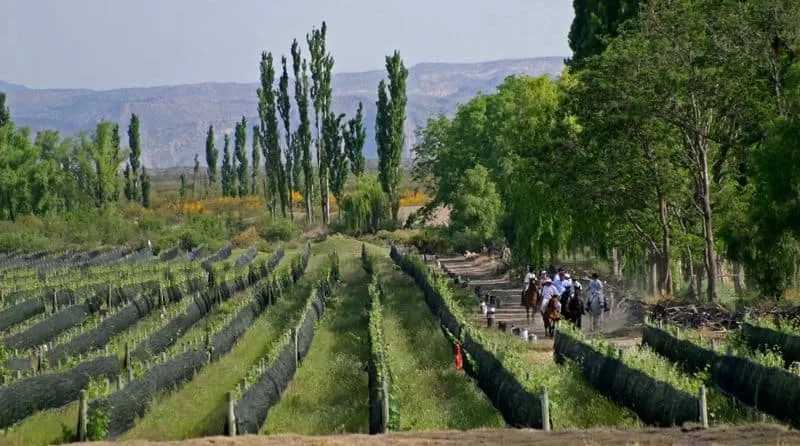
If you want to find out where these gleams in the eye have been leading the past few years, head to the Mendoza region of Argentina, where an exploding wine industry and bargain prices have brought a flood of new development. There are supposedly some 16,000 vineyards in Argentina being fed by the runoff water from the Andes Mountains and depending on whom you talk to, some 1,200 to 1,700 wineries. 

“There’s no way to really know how many wineries are here,” says Charlie O’Malley, who edits The Grapevine magazine and runs Grapevine Wine Tours with his partner Kelly Thornhill. “New ones are opening all the time and there’s always the issue of who has officially filed the right paperwork or not.” Then there’s the geography. Mendoza is the main wine province, but good wine is also coming out of Salta Province in the north and Patagonia in the south.

There’s no dispute about the growth path, however. Argentina’s wine exports topped $350 million in 2004 and $400 million in 2005, according to the country's Institute of Wine. Over the past decade, the industry has collectively invested some billion and a half dollars in the latest technology and has been quite successful in marketing their wines, especially their signature Malbec, to the world. The country’s wines have gone from jug wines mostly meant for local consumption to ones that are winning awards against the best from the U.S., France, and Italy. 

The new dreamers are certainly not the first ones to breeze into Mendoza looking to start a winery. The industry has been in place here since the 19th century, with immigrants from Spain and Italy applying their knowledge and hard work in the new world. The Malbec grape was actually brought to Argentina by European immigrants in the 1860s. It rarely performs as more than a blending wine elsewhere, but the climate in the new world has served it well. 

These days the immigrants still come from wine-producing countries in Europe, but others now join them from the U.S., Canada, Chile, and far-flung places around the globe. They are lured by an exploding growth curve and land prices that can still be downright cheap. Listings on EscapeArtist.com often come in under $2,000 an acre. 

More than a few investors have returned home later with their tail between their legs, however. “Buying a little slice of heaven is the easy part,” says O’Malley. “To secure the right conditions and then run and manage the place is a different story.”

One person playing a big part in improving the odds for newcomers is David English, president of Mendoza’s expatriate club. His company, English Associates (), takes potential investors by the hand and not only leads them through the purchase process, but helps them start and run the actual vineyard through the start-up and production phase. 

Finding Local Expertise
“We work with the client to help them find the right property, on a consulting fee basis,” English says. “But then we continue to work with the client after they have made the purchase. We look after their investment and develop it, find the right local people, and become their local eyes and ears on the ground.” 

“The market here is very hot, with foreign investors taking advantage of the gap in values,” he adds. “With prices rising dramatically in some areas and no accurate records of real estate sale prices, it’s easy for someone to get suckered. By looking at hundreds of properties a year, we have a good feel for real values. Since we’re not a real estate agency, we can also be impartial about what’s the best option for the buyer and give the person advice that’s not tainted by commission considerations.”

English hails from Nashville, Tennessee, in a region better known for Jack Daniels and George Dickel American whisky than for wine. There he owned a company that licensed music industry trademarks (such as Gibson and Steinway) and developed licensed merchandise for sale in overseas markets. 

Ten years ago, at a Rotary Club meeting in his home town, he found out about a group study exchange program where participants spend 6 weeks visiting another country, seeing other businesses and staying in homes of business owners. He followed up on it and in 1997, was selected for the scholarship and spent a month and a half in Patagonia. “I fell in love with the country and people,” English explains, “and I kept coming back on subsequent trips, always looking for opportunities.” Eventually he fell in love with another aspect of Argentina—his wife Carolina. 

English got into the wine business by default. He started out offering general business services to foreign investors and foreign corporations, helping people set up locally or form partnerships. He dealt with the locals and mitigated the investment risk. Word soon got out to wine investors and real estate consulting followed. “Because of where we are in Mendoza, most of the companies and individuals who came to us were looking to invest in or partner with the wine business,” he explains. 

English sees his role as helping people find success by keeping them out of trouble. “The most important offering from us has been in keeping people from totally messing up. Sometimes we’re successful by telling people not to buy a property. We keep them from spending $200,000 for something that wouldn’t work out as a vineyard.”

How NOT to Buy a Winery
Hubris often leads to an investor’s downfall in the wine region of Mendoza. The most famous example in these parts is a failed investment by the Kendall Jackson company of California. They came down to Argentina in 1996 with their own staff and an attitude that they knew exactly what it would take to launch a successful winery in the area. They reportedly spent close to 8 million dollars. In 2003 they declared the adventure a bust and ended up selling the winery for $2.5 million. For those not doing the math, that’s a loss of $5.5 million after 7 years of work. 

One of the most common mistakes wine investors make is not making an attempt to understand the people, the culture, and the way things work in a foreign country. “Ideally, you do it methodically and slowly and you don’t need someone like me so much,” English says. “In the best case you would come down here and live for a couple of years first. Then buy when you know the country, the people, the region, and the language. At that point you understand the culture, what the risks are, and what it is really like to live here. Most people do tend to jump into things too quickly.” 

Another common mistake is to underestimate the importance of finding the correct site for a vineyard. Many people don’t learn until after arrival how huge the Mendoza province really is. The wine-producing area of San Rafael, for instance, is 150 miles from Mendoza city, but still a part of Mendoza province. Getting a handle on this vast region is not easy for a newcomer. 

“I personally know several people who purchased property they thought was a great deal and found out the land was close to worthless,” says English. “They were over a geological fault, or they didn’t have water rights, so they were essentially stuck with un-irrigated desert land. People with wine experience come from a country like Italy and think they know everything. Unfortunately they don’t know about local microclimates or local soil characteristics.”

Argentina is in a unique position in both cases. Mendoza vineyards receive plenty of sunshine, but almost no rain. Instead vines are watered through irrigation, from water that comes down from the Andes Mountains. Vineyards take this water and either periodically flood the fields or use drip irrigation systems. 

Unfortunately, this means those without water rights are out of luck from the start. It also means that more than a few plots of land are unsuitable for growing grapes, due to salinity levels in the soil. “Historically, there has been a lot of sharecropping of garlic, onions, and tomatoes in the region,” English explains. If farmers do not properly irrigate the land—which is okay for growing onions—it can be a big problem later if someone buys the land intending to grow grapes. You have to do the proper soil sampling and analysis to know if the dirt will work or not.”
.

Live In Argentina
.
 RESOURCE LINKS FOR ARGENTINA
Government, Economy & Country Information for Argentina
Country Information for Argentina.
Books on Living in Argentina
Expatriate, Travel, Cultural & Employment Resources Books for Argentina.
Education & Schools in Argentina
Information on Schools, Colleges and Universities.
Literature, Art, Tango, History of Argentina, Sports
Art and Culture in Argentina. A nation of rich literature, dance, music and the finer arts.
Real Estate in Argentina
Real Estate In Argentina - Current real estate listings of properties in Argentina.
Real Estate in Argentina II
Real Estate links in Argentina.
Articles on Living & Investing in Argentina
Articles On Living & Investing In Argentina - Also Including Articles On Real Estate In Argentina -
Vacation Rentals In Argentina
Vacation Rentals worldwide - including Argentina
Vacation & Travel In Argentina
EscapeArtist Travel - Our new section providing unique travel to unique locations
Embassy Resources for Argentina
Embassy Resources for Argentina - On our sister site EmbassyWorld.
Internet WWW
The Internet In República Argentina.
Maps of Argentina
Maps of Argentina - Our own Embassy maps plus a large number of differing Argentinian maps, also including city maps.
Hospitals in Argentina
A List of Hospitals in Argentina in our Hospitals section in Latin America.
Argentina Travel & Tourism
Travel and Tourism, Resorts, Education Travel Programs to Argentina -
Media & News In Argentina
News & Media from Argentina - Organizations - Resources -
Banks of Argentina
Banks of Argentina - See Banks of Argentina at our Banks Section.
Search Engines Of Argentina
Argentine search engines on the Internet.
Science & Technology
Education and Science in Argentina.
..
Articles on Argentina
READ THESE ARTICLES FREE
Argentina: Exploring the Delta Area of Buenos Aires 
The Argentinian Gaucho
Argentinian Tango: It Takes Two
All Articles On Living & Investing Argentina Including Real Estate In Argentina
.
Real Estate In South America
See Current Real Estate Listings In South America -  Now In Our Real Estate Marketplace - Numerous real estate listings for Australia & New Zealand  with color photos - Beachfront bargains, Farms, Islands, Enclaves, Coast Property, Sale by Owner, Current Listings 24 hours a day, seven days a week.  Also see Real Estate in Central America & Mexico
Sell Your Property In South America
..
Offshore Telecommuting
The Friendly Realtor and Ice From the Sky
Buying real estate in a foreign country cannot be approached the same way it would be in a buyer’s home country. As in many developing markets around the world, Argentina’s real estate system is far from sophisticated. There is no multiple listing system. Official sale prices recorded in the tax office rarely reflect what was actually paid for a property. There are no “comparable sale reports” to pore over when forming an offer. 

Real estate brokers in Argentina are not licensed and some can frankly be described as shady. More than a few buyers have been burned by property with muddy titles or land that ended up being saddled with liens. 

Now let’s imagine our dreamy buyer with a gleam in his eye did most everything right. He got a good property at a good price, hired the right people, and navigated the local regulatory issues properly. He’s just about to harvest his first year’s grape crop. Then a hailstorm hits and wipes out his entire field of what was going to be wine.

Mendoza has an almost perfect climate for growing grapes. There’s ample sunshine, the right altitude, cool nights, plenty of water from melting snow, and little need of chemicals. There’s just one little problem: giant balls of ice that rain down from the sky at the worst possible time of the year. 

On February 15, 2006, a hailstorm that ripped through the area around harvest time destroyed 4,000 hectares of land, damaged 50 houses, and even killed two people. Some balls were the size of a baseball and the ice on the ground stacked up several feet. In the aftermath, some wineries lost a year’s work and all their money in less than 30 minutes. 

Some wineries can afford to hedge their bets by planting grapes in several different regions, at different elevations. Smaller upstarts don’t have this option. “An investor really needs to factor hail nets into the investment,” says English. The hail nets go over the vines and protect the grapes from falling hail. Of course an investor wouldn’t need to include this expensive addition in the budget in Napa Valley, the Loire Valley, or Stellenbosch, but in Mendoza doing the nets are like a pricey insurance policy. 

Doing it Right
English says no client of his has met complete disaster yet, but he admits it’s too soon to really tell. “Often you don’t know until 8 or 10 years out whether your wines are truly going to be successful or not. Nobody should go into this unless they have ample capital they won’t need to get to for quite a while. This is not a quick return investment.”

He’s encouraged by the early success stories, however. He points to a property buyer from Bermuda who wanted to buy a vineyard. English found a local who wanted to sell part of his land, but the seller also wanted to have capital investment in his own land as part of the deal. So the whole vineyard was developed as a partnership. The two owners are able to share equipment and expenses, including a single agronomist, a single viniculturist, and one tractor. 

The investors that are most likely to succeed at owning a winery tend to follow a certain pattern, however. For one thing, they are seldom mad alchemists with a dream. “Winemaking is as much a science as an art and requires the cool, analytical mind of a planner and designer,” says O’Malley. “Your typical artist on the other hand is more famous for drinking wine than making it.”

David English adds that clear thinking is also a definitely determinate of success. He says investors need to clearly define what the objective is. Why are they doing it? Why now? 
Will this be a hobby? A reason to visit a vacation home? A high-return investment that is related to a love of wine? 

Once the objective is clear, it is much easier to define what is appropriate and realistic. “When someone is completely clear about what they are looking for, the choice comes from within; it is not something they can be pushed into,” English explains.

If a full-on, risk-a-fortune investment sounds too daunting, there is a middle ground for hobbyists. J. Peter Meuli of Finca Los Amigos has set up a partial ownership program for people who prefer to just take small steps and let other experts take care of the details. Buyers can purchase a 10-acre plot of vineyard land and either buy or build a vacation home on the property. The new owners can tap into the expertise and equipment already on hand at Finca Los Amigos—for a fee of course. 

The developers have set aside 125 hectares (309 acres) of virgin land that will be transformed into Argentina’s first “vineyard village.” Some of the individual sites have been sold, but most are still available. Package prices to get a vineyard up and running range from $165,000 to just under $300,000, the latter including a rustic two-bedroom home.

Looking to the Future
With all the risks and the time factor, can it be a good investment, from purely a financial perspective? The basic laws of economics are still favoring Argentina and will for a while. A vineyard in Napa Valley costs 10 or 15 times what a comparable one does in Argentina, yet the best Argentine wines are starting to command respectable prices. “Vineyard prices will never be what they are in California or Italy,” English says, “but they are certainly moving up toward a middle ground.” The value of some prime land has doubled in value in 12 months. That can’t last, but many think that 30% a year is probably realistic for quite a few years to come—if the buyer’s price was not inflated to start with.

Many think that Argentina’s best years are still ahead of it. The overall quality is still improving, the word is still getting out, and a lot of production is still tied up in making cheap jug wine and concentrate. Argentina exported less than 1 percent of its harvest in 1992. In 2005 the percentage was up to 16 percent—still a low number by international standards. So all those Argentine wines on store shelves and in restaurants abroad still represent a very small portion of what’s possible. 

In addition, who around the world has heard of Torrontés? These fragrant and fruity white wines with crisp acidity are still mostly just known to tourists who have visited the country. It’s only a matter of time until wine drinkers looking for the next new thing start discovering this distinctive wine and importers begin bringing in more stock of Argentine whites to add to the wide range of reds.

So for all those wine dreamers with a gleam in the eye, there’s a bright future ahead—if you take your time and listed to local advice. 
.

Tim Leffel is the author of Make Your Travel Dollars Worth a Fortune, as well as The World’s Cheapest Destinations
.
The Portable Professional - Earn A Living Worldwide
The Portable Professional - Earn A Living Worldwide - It is now possible to make a living from anywhere you can log on.  The technology is there and the opportunities are there.  Mark McMahon has written an eye-opening report on how to make a living worldwide.  Earn US Dollars and/or EUROS from wherever you are on the planet.  The options are limitless and the time is now.  Learn more about how to break free - learn how you can live your life like it belongs to you - Live Where You Want To Live! ~ Live How You Want To Live! ~ And Make Money Doing It! -
......
Remount!
.
| Add Url | Home | Contact | Advertising Send This Webpage To A Friend | Escape From America Magazine Index | Offshore Real Estate Quarterly | International Telephone Directory  | About Escape | Embassies Of The World  |  Report Dead Links On This Page| Maps Of The World | Articles On This Website | Disclaimer | Link 2 Us | Help | Jobs Overseas | International Real Estate | Find A CountryExpatriate Search Tools | Expat Pages   | Offshore Investing | International Marketplace | Yacht Broker - Boats Barges & Yachts For Sale | Search Engines Of The World |
© Copyright 1996 -  EscapeArtist Inc. All Rights Reserved