Escape Artist
  • Features
    • Interview
    • Expat News
    • Field Notes
    • Trending
  • Your Plan B
    • Finance
    • Real Estate
    • Second Citizenship
    • Digital Nomad
    • Healthcare
  • Destinations
    • Europe
      • France
      • Germany
      • Italy
      • Portugal
      • Scandinavia
      • Spain
      • United Kingdom
      • Rest of Europe
    • Central America
      • Belize
      • Costa Rica
      • El Salvador
      • Guatemala
      • Honduras
      • Nicaragua
      • Panama
    • Others
      • Africa
      • Asia
      • Australia
      • North America
      • South America
      • Middle East
      • Rest of the World
  • Travel Tips
    • Know Before You Go
    • Packing List
    • Food + Culture
    • Health + Wellness
  • Subscribe
Escape Artist
  • Features
    • Interview
    • Expat News
    • Field Notes
    • Trending
  • Your Plan B
    • Finance
    • Real Estate
    • Second Citizenship
    • Digital Nomad
    • Healthcare
  • Destinations
    • Europe
      • France
      • Germany
      • Italy
      • Portugal
      • Scandinavia
      • Spain
      • United Kingdom
      • Rest of Europe
    • Central America
      • Belize
      • Costa Rica
      • El Salvador
      • Guatemala
      • Honduras
      • Nicaragua
      • Panama
    • Others
      • Africa
      • Asia
      • Australia
      • North America
      • South America
      • Middle East
      • Rest of the World
  • Travel Tips
    • Know Before You Go
    • Packing List
    • Food + Culture
    • Health + Wellness
  • Subscribe
👤

THE NUMBER ONE SOURCE FOR BUILDING A LIFE ABROAD

This field is for validation purposes and should be left unchanged.
  • Your Plan B

Dollars to Donuts: I’ll Take the Dollar Please

  • BY EA Editors
  • February 25, 2017
Total
0
Shares
0
0
0

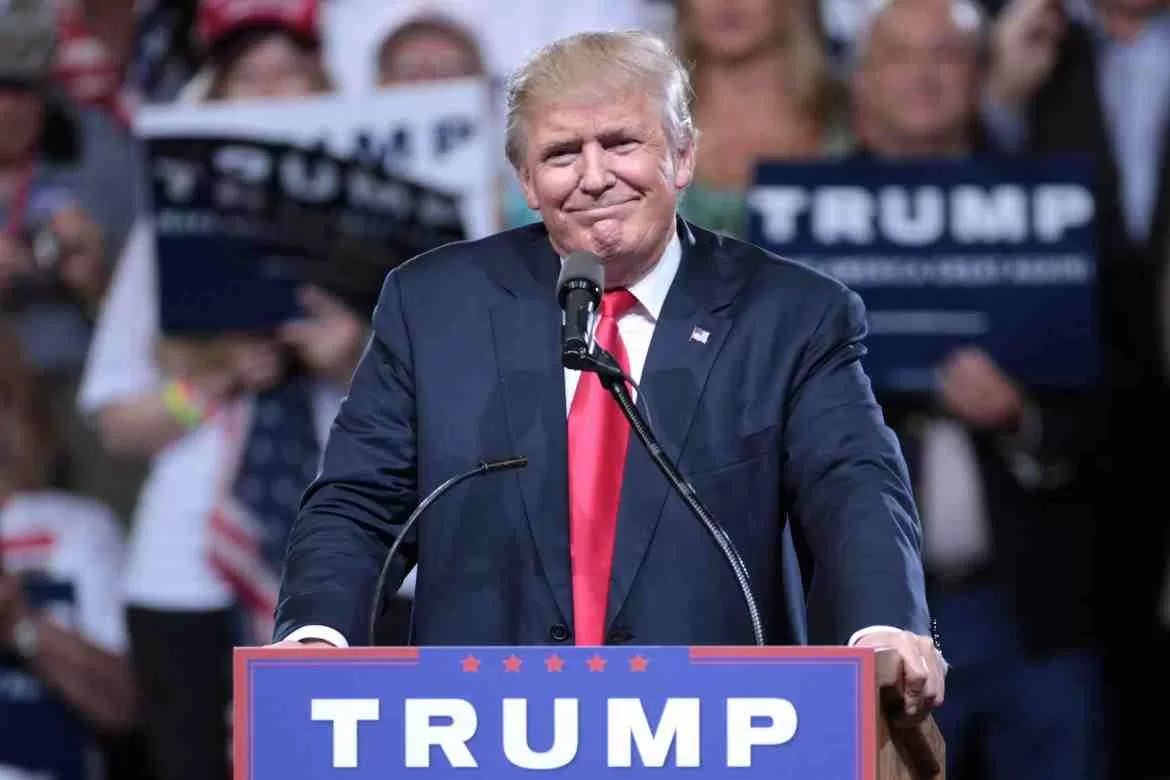
President Trump has a tendency of viewing global trade in terms of black and white: exports are good, imports are bad. To him, the benefits that a trade deal offers the U.S. economy is measured by the resulting trade surplus or deficit. As I highlighted in a recent article, Trump has condemned U.S. trade with both Mexico and China, looking primarily at the trade deficits of the U.S. as being responsible for the loss of American manufacturing jobs. He has proposed a number of protectionist measures in the form of tariffs to rectify the perceived slight against U.S. workers. However, there is another major avenue President Trump seems keen to explore that would have a similarly large impact on global trade: the dollar.

Trump has vocalized his beliefs that the dollar is too strong on numerous occasions. Given his views on global trade, it logically follows that he would be averse to a strong dollar, as it makes it cheaper to import goods from abroad and makes U.S. goods relatively more expensive on the global market. But Trump’s public repudiation of a strong dollar, like his other remarks on trade, runs in stark contrast to previous U.S. policy, which has favored a strong greenback and typically limited such public commentary on the issue to the Treasury Secretary. In theory, a strong dollar keeps inflation and interest rates in check, while providing the American consumer with stronger purchasing power abroad. Moreover, a strong dollar is a good measure of faith in a country’s economy, as investments flock to vehicles in that currency. President Trump’s Treasury Secretary, Steven Mnuchin, has since attempted to artfully walk back this sentiment without appearing to contradict Trump, saying that a strong dollar is a good thing for long-term purposes but has some short-term negative aspects. In fact, the Huffington Post reported that President Trump placed a 3 A.M. phone call to his then national security advisor, Mike Flynn, asking whether a strong dollar or a weak dollar is better for the U.S. economy, so it is safe to say that the Trump administration’s policy stance regarding the dollar is shrouded in uncertainty.  

Regardless of Trump’s rhetoric, it is unlikely we will see the dollar significantly devalued in the near future. In fact, Trump’s own policy proposals are likely to strengthen the dollar further. The president’s plan to boost the U.S. economy through fiscal stimulus by increasing government spending on infrastructure, cutting taxes, and eliminating regulatory red tape are likely to result in an augmentation of the federal budget deficit and create inflationary pressures on the economy. This will likely cause the Federal Reserve to increase rates at a faster pace, thereby strengthening the dollar relative to other currencies. Mr. Trump has even criticized the Fed for not raising interest rates in the past and keeping them artificially low.

     Throughout the Obama administration, the Fed engaged in three rounds of Quantitative Easing and has kept interest rates near zero since the recession. The influx of available and cheap capital was intended to lead to a wealth effect that produced more consumer spending. However, political obstacles prevented the implementation of direct fiscal stimulus, leaving the Fed to shoulder the brunt of the U.S. economic recovery itself. The intended rapid economic growth never materialized, and the Fed has remained dovish in its stance on interest rates for fear of jeopardizing the anemic recovery, raising interest rates just once in 2016 after initially planning to do so four times.

     This late in the economic cycle, with the U.S. near full employment, a sharp increase in spending is likely to induce inflationary pressures that have already begun to manifest. In January, consumer prices rose by their greatest margin in four years. The consumer price index (CPI) rose 0.6% month-on-month, doubling expectations of 0.3%. Year-on-year, the CPI rose by 2.5%, well ahead of the Fed’s 2% target rate. Moreover, the Personal Consumption Expenditure price index, a more conservative gauge of inflation in the U.S. economy that the Fed relies on when constructing monetary policy, jumped 0.9% in January, resulting in a 1.9% increase over the past 12 months – up from 1.6% in December.

This makes future rate increases more likely in the coming months. In fact, for over a week, Fed officials from across the country have hinted that the central bank will be taking a more hawkish approach in the near future. New York Fed president, William Dudley, who typically takes a dovish stance, has stated that the Fed should move “sooner rather than later” on rate hikes. Given the lack of new information contained in President Trump’s recent speech to a joint session of Congress, the market is anxious to hear from Fed Chair Janet Yellen, who is set to give a speech Friday that should provide greater insight into whether or not the Fed will be raising rates during the March 15 meeting of the Federal Open Market Committee (FOMC), a branch of the Fed that makes monetary policy determinations.

     Given the economic conditions facing the U.S. economy, it is highly unlikely that much depreciatory pressure will be placed on the dollar. President Trump could order the Treasury to sell dollars for foreign currencies, but doing so would likely result in sterilized interventionism as more aggressive rate hikes would be the likely Fed response. In response, Trump could lash out, but any action other than political jawboning would threaten the Fed’s independence and is unlikely. The political instability in the Eurozone is further evidence of the dollar’s continuing strength, as populist factions in France, the Netherlands, and Germany threaten the very existence of the European Union. If President Trump is serious about devaluing the dollar, the biggest impact he could have would be a reexamination of his proposed fiscal policy.

Contact Author

"*" indicates required fields

This field is for validation purposes and should be left unchanged.
Name*
Please let us know what's on your mind. Have a question for us? Ask away.

Stay Ahead on Every Adventure! 

Stay updated with the World News on Escape Artist. Get all the travel news, international destinations, expat living, moving abroad, Lifestyle Tips, and digital nomad opportunities. Your next journey starts here—don’t miss a moment! Subscribe Now!

President Trump has a tendency of viewing global trade in terms of black and white: exports are good, imports are bad. To him, the benefits that a trade deal offers the U.S. economy is measured by the resulting trade surplus or deficit. As I highlighted in a recent article, Trump has condemned U.S. trade with both Mexico and China, looking primarily at the trade deficits of the U.S. as being responsible for the loss of American manufacturing jobs. He has proposed a number of protectionist measures in the form of tariffs to rectify the perceived slight against U.S. workers. However, there is another major avenue President Trump seems keen to explore that would have a similarly large impact on global trade: the dollar.

Trump has vocalized his beliefs that the dollar is too strong on numerous occasions. Given his views on global trade, it logically follows that he would be averse to a strong dollar, as it makes it cheaper to import goods from abroad and makes U.S. goods relatively more expensive on the global market. But Trump’s public repudiation of a strong dollar, like his other remarks on trade, runs in stark contrast to previous U.S. policy, which has favored a strong greenback and typically limited such public commentary on the issue to the Treasury Secretary. In theory, a strong dollar keeps inflation and interest rates in check, while providing the American consumer with stronger purchasing power abroad. Moreover, a strong dollar is a good measure of faith in a country’s economy, as investments flock to vehicles in that currency. President Trump’s Treasury Secretary, Steven Mnuchin, has since attempted to artfully walk back this sentiment without appearing to contradict Trump, saying that a strong dollar is a good thing for long-term purposes but has some short-term negative aspects. In fact, the Huffington Post reported that President Trump placed a 3 A.M. phone call to his then national security advisor, Mike Flynn, asking whether a strong dollar or a weak dollar is better for the U.S. economy, so it is safe to say that the Trump administration’s policy stance regarding the dollar is shrouded in uncertainty.  

Regardless of Trump’s rhetoric, it is unlikely we will see the dollar significantly devalued in the near future. In fact, Trump’s own policy proposals are likely to strengthen the dollar further. The president’s plan to boost the U.S. economy through fiscal stimulus by increasing government spending on infrastructure, cutting taxes, and eliminating regulatory red tape are likely to result in an augmentation of the federal budget deficit and create inflationary pressures on the economy. This will likely cause the Federal Reserve to increase rates at a faster pace, thereby strengthening the dollar relative to other currencies. Mr. Trump has even criticized the Fed for not raising interest rates in the past and keeping them artificially low.

     Throughout the Obama administration, the Fed engaged in three rounds of Quantitative Easing and has kept interest rates near zero since the recession. The influx of available and cheap capital was intended to lead to a wealth effect that produced more consumer spending. However, political obstacles prevented the implementation of direct fiscal stimulus, leaving the Fed to shoulder the brunt of the U.S. economic recovery itself. The intended rapid economic growth never materialized, and the Fed has remained dovish in its stance on interest rates for fear of jeopardizing the anemic recovery, raising interest rates just once in 2016 after initially planning to do so four times.

     This late in the economic cycle, with the U.S. near full employment, a sharp increase in spending is likely to induce inflationary pressures that have already begun to manifest. In January, consumer prices rose by their greatest margin in four years. The consumer price index (CPI) rose 0.6% month-on-month, doubling expectations of 0.3%. Year-on-year, the CPI rose by 2.5%, well ahead of the Fed’s 2% target rate. Moreover, the Personal Consumption Expenditure price index, a more conservative gauge of inflation in the U.S. economy that the Fed relies on when constructing monetary policy, jumped 0.9% in January, resulting in a 1.9% increase over the past 12 months – up from 1.6% in December.

This makes future rate increases more likely in the coming months. In fact, for over a week, Fed officials from across the country have hinted that the central bank will be taking a more hawkish approach in the near future. New York Fed president, William Dudley, who typically takes a dovish stance, has stated that the Fed should move “sooner rather than later” on rate hikes. Given the lack of new information contained in President Trump’s recent speech to a joint session of Congress, the market is anxious to hear from Fed Chair Janet Yellen, who is set to give a speech Friday that should provide greater insight into whether or not the Fed will be raising rates during the March 15 meeting of the Federal Open Market Committee (FOMC), a branch of the Fed that makes monetary policy determinations.

     Given the economic conditions facing the U.S. economy, it is highly unlikely that much depreciatory pressure will be placed on the dollar. President Trump could order the Treasury to sell dollars for foreign currencies, but doing so would likely result in sterilized interventionism as more aggressive rate hikes would be the likely Fed response. In response, Trump could lash out, but any action other than political jawboning would threaten the Fed’s independence and is unlikely. The political instability in the Eurozone is further evidence of the dollar’s continuing strength, as populist factions in France, the Netherlands, and Germany threaten the very existence of the European Union. If President Trump is serious about devaluing the dollar, the biggest impact he could have would be a reexamination of his proposed fiscal policy.

Contact Author

"*" indicates required fields

If you'd like to read the full story, simply enter your email to subscribe to our newsletter.

For even more expert insights, unmissable resources, and exclusive invites, explore our premium subscription offers here.

This field is for validation purposes and should be left unchanged.


OR

Subscribe Now

Already a Subscriber? Click here to login

Subscription required

You've reached your limit of free articles. For full access to Escape Artist, and all of our insights on travel, moving abroad, and the digital nomad life, click here to Subscribe.

Already a Subscriber? Log in here

Total
0
Shares
Share 0
Tweet 0
Pin it 0
Previous Article
  • Your Plan B

With the TPP Scrapped, Pacific Nations Form Their Own Trade Deal

  • BY Adam McGeehan
  • February 25, 2017
View Post
Next Article
  • Your Plan B

Alternative Ways for Travelers to Admire the Natural World

  • BY EA Editors
  • February 25, 2017
View Post
You May Also Like
How to Secure Hungarian Citizenship Yourself Step-by-Step Guide
View Post
  • Second Citizenship
DIY How to Secure Hungarian Citizenship Yourself
  • BY Ethan Cohen & Learn Hungarian Anywhere
  • April 29, 2026
Magnifying glass focused on Estonia and the Baltic region on a printed map of Northern and Eastern Europe.
View Post
  • Second Citizenship
Estonia’s e-Residency and a New Kind of Nation
  • BY Ethan Rooney
  • April 29, 2026
Children touching bananas in the tropical climate of Costa Rica
View Post
  • Costa Rica
Is Costa Rica the Fresh Start Your Family Is Looking For?
  • BY Carla Rodrigues
  • April 27, 2026
Chess pieces on a board overlaid with financial charts and data visualizations representing strategic financial planning
View Post
  • Finance
Building a Resilient Banking Strategy for Life Abroad
  • BY Isha Sesay
  • April 22, 2026
Two students walking across a university campus at sunset, representing international schooling, higher education, and study abroad opportunities.
View Post
  • Second Residency
Raising Global Kids Without Breaking the Bank
  • BY EA Editorial Staff
  • April 22, 2026
Panama City skyline at night with illuminated towers, coastal boulevard, and light trails running along the waterfront
View Post
  • Plan B
Ready to Leave the US? These Countries Might Trump the American Dream
  • BY Emily Draper
  • April 20, 2026
Aerial view of a coastal Portuguese city with hotels, residential buildings, mountains, and the Atlantic shoreline stretching into the distance
View Post
  • Golden Visa
Exploring Currency Considerations for Portugal’s Golden Visa
  • BY Iva Slavtcheva
  • April 15, 2026
Evening street scene in Dubai with illuminated digital billboards, pedestrians, and modern skyscrapers rising in the background
View Post
  • Plan B
Geopolitical Risk and the Shift Beyond the Gulf
  • BY Luigi Wewege
  • April 8, 2026
Trending Posts
  • Panama City skyline at night with illuminated towers, coastal boulevard, and light trails running along the waterfront 1
    • Plan B
    Ready to Leave the US? These Countries Might Trump the American Dream
    • April 20, 2026
  • Two people sitting on a beach at sunset with waves rolling in and rocky coastline silhouetted against the golden sky 2
    • Costa Rica
    Why Some Expats Leave Costa Rica (and Others Stay Forever)
    • April 17, 2026
  • Chess pieces on a board overlaid with financial charts and data visualizations representing strategic financial planning 3
    • Finance
    Building a Resilient Banking Strategy for Life Abroad
    • April 22, 2026
  • People enjoying the summer at the beach at Lake Ohrid in North Macedonia 4
    • Europe
    Inside North Macedonia: Europe’s Most Unexpected Reinvention
    • April 24, 2026
  • Children touching bananas in the tropical climate of Costa Rica 5
    • Costa Rica
    Is Costa Rica the Fresh Start Your Family Is Looking For?
    • April 27, 2026
Subscribe
Know Before You Go
  • How to Secure Hungarian Citizenship Yourself Step-by-Step Guide 1
    • Second Citizenship
    DIY How to Secure Hungarian Citizenship Yourself
    • April 29, 2026
  • Children touching bananas in the tropical climate of Costa Rica 2
    • Costa Rica
    Is Costa Rica the Fresh Start Your Family Is Looking For?
    • April 27, 2026
  • People enjoying the summer at the beach at Lake Ohrid in North Macedonia 3
    • Europe
    Inside North Macedonia: Europe’s Most Unexpected Reinvention
    • April 24, 2026
  • Panama City skyline at night with illuminated towers, coastal boulevard, and light trails running along the waterfront 4
    • Plan B
    Ready to Leave the US? These Countries Might Trump the American Dream
    • April 20, 2026
  • Two people sitting on a beach at sunset with waves rolling in and rocky coastline silhouetted against the golden sky 5
    • Costa Rica
    Why Some Expats Leave Costa Rica (and Others Stay Forever)
    • April 17, 2026
Learn More
  • About Us
  • Contact
  • Advertise
  • Subscribe
  • Shop
Why Subscribe

The newly imagined Escape Artist brings you fresh content with a global focus, and sharp, up-to-the-minute coverage of the joys, challenges, and opportunities of life abroad.

For a limited time, we’re offering a special discount on all subscription deals, so be sure to lock-in these incredible savings and start receiving top-notch travel and expat content today!

Sign up for the EA Newsletter

Get important news delivered directly to your inbox and stay connected!

This field is for validation purposes and should be left unchanged.
Escape Artist
  • Terms & Conditions
  • Privacy Policy
  • Cookies Policy
  • Disclaimer

Input your search keywords and press Enter.

Escape Artist

The Newsletter for a
Life Beyond Borders

Practical insights and real stories for those building a life abroad, trusted by 75,000 readers worldwide.

This field is for validation purposes and should be left unchanged.

Before you go, want $50 off your Summit registration?

Subscribe, and get $50 discount code for Plan B Summit registration.

Download Your Free Guide

Fill out the form below to get instant access to your guide + receive a $50 discount code for Plan B Summit 2026!

Download Your Free Guide

Fill out the form below to get instant access to your guide + receive a $50 discount code for Plan B Summit 2026!

Download Your Free Guide

Fill out the form below to get instant access to your guide + receive a $50 discount code for Plan B Summit 2026!

Newsletter Subscription