Escape Artist
  • Features
    • Interview
    • Expat News
    • Field Notes
    • Trending
  • Your Plan B
    • Finance
    • Real Estate
    • Second Citizenship
    • Digital Nomad
    • Healthcare
  • Destinations
    • Europe
      • France
      • Germany
      • Italy
      • Portugal
      • Scandinavia
      • Spain
      • United Kingdom
      • Rest of Europe
    • Central America
      • Belize
      • Costa Rica
      • El Salvador
      • Guatemala
      • Honduras
      • Nicaragua
      • Panama
    • Others
      • Africa
      • Asia
      • Australia
      • North America
      • South America
      • Middle East
      • Rest of the World
  • Travel Tips
    • Know Before You Go
    • Packing List
    • Food + Culture
    • Health + Wellness
  • Subscribe
Escape Artist
  • Features
    • Interview
    • Expat News
    • Field Notes
    • Trending
  • Your Plan B
    • Finance
    • Real Estate
    • Second Citizenship
    • Digital Nomad
    • Healthcare
  • Destinations
    • Europe
      • France
      • Germany
      • Italy
      • Portugal
      • Scandinavia
      • Spain
      • United Kingdom
      • Rest of Europe
    • Central America
      • Belize
      • Costa Rica
      • El Salvador
      • Guatemala
      • Honduras
      • Nicaragua
      • Panama
    • Others
      • Africa
      • Asia
      • Australia
      • North America
      • South America
      • Middle East
      • Rest of the World
  • Travel Tips
    • Know Before You Go
    • Packing List
    • Food + Culture
    • Health + Wellness
  • Subscribe
👤

THE NUMBER ONE SOURCE FOR BUILDING A LIFE ABROAD

This field is for validation purposes and should be left unchanged.
  • Your Plan B

Chinese Siberia

  • BY Jack Wheeler
  • June 24, 2018
Total
0
Shares
0
0
0

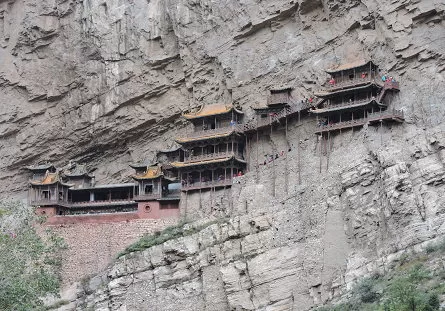
This is the Hanging Monastery in Datong, China.  Built on a cliff face on the edge of Inner Mongolia, it’s over 1,500 years old.

I’ve just spent the last three weeks going to remote regions in China, where there are constant reminders of just how ancient of a land this is.  So many centuries of history gives the Chinese long memories.  Here’s a historical memory every schoolkid in China knows:

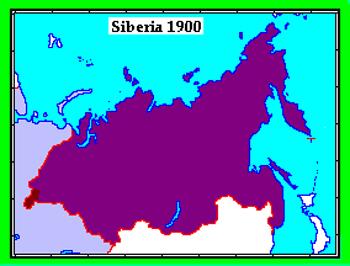
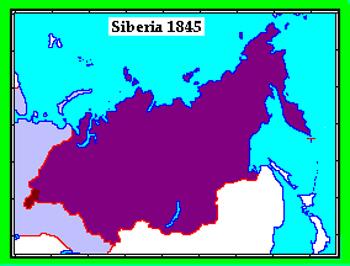
Notice any difference between these two maps?Chinese Siberia
Chinese Siberia

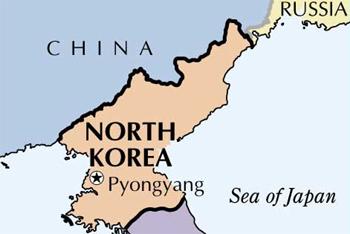
As you can see, Russia gobbled up a huge chunk of northern China, wrapping all the way around it to Korea, such that northern China remains landlocked with no access to the Sea of Japan to this day:
Chinese Siberia

How did China lose all this territory, which it once called its Maritime Provinces?  It was thanks to a sociopathic lunatic named Hong Xiuquang (1814-1864).

In 1843, Hong read a Bible tract by a Chinese Christian missionary, and he decided that he was the younger brother of Jesus Christ. And as the New Messiah, God instructed him to rid China of its Manchurian rulers of the Ching (Qing) Dynasty.

His movement, Taiping Tianguo (Heavenly Kingdom of Peace), gained millions of followers and precipitated the deadliest civil war in human history.  Between 1851 and 1864, the Taiping Rebellion cost China 50 million lives.

It was finally defeated by an English officer leading the Ching Imperial Army.  His victory forever earned him the sobriquet Charles “Chinese” Gordon.  Hong poisoned himself.

During the Taiping chaos, China was unable to defend her borders and Russia’s Czar Alexander II (1818-1881) saw his chance to achieve his country’s dream of warm-water ports on the Pacific Ocean.

He assigned the task to his Governor of Eastern Siberia, Nikolay Muravyov (1809-1881), and Russian General Gennady Nevelskoy (1813-1876), who proceeded to move some 20,000 Baikal and Amur Cossacks east of the Amur-Ussuri Rivers and onto Sakhalin Island.

By 1858, Russian control of the region was a fait accompli.  On May 28th at the Siberian town of Aigun, the representative of the Chinese Emperor was forced to sign the Treaty of Aigun which ceded China’s Maritime Provinces to Russia.  For this, Muravyov was granted the title Count Amursky (“of the Amur”) by the Czar.

This history puts into perspective a news story in mid-October (10/16) by Russia’s only independent television station, Ren TV, reporting from Vladivostok:

The emerging demographic situation developing here between Russia and China is simply catastrophic. The crisis is due to the creeping expansion of thousands of Chinese migrants. Chinese workers entering Siberia are replacing Russians who are not prepared to toil 12 hours a day for a pittance.

Chinese students are taught that Siberia is their land, stolen from China in the 19th century.  It is suspected by many Russians here that China is subsidizing the migration of its citizens.  Demographers predict that by 2025, Chinese will be the Russian Far East’s predominant ethnic group.  Then, it is feared, they will gain the right to vote and demand union with China.

If you’re familiar with the Reconquista plan of the Mexican Aztlan movement (to reconquer the Southwest U.S. “stolen” by America in the 19th century), this may sound like déjà vu all over again.  Yet, however bad you think our illegal immigrant problem is, it’s pipsqueak compared to Russia’s in Siberia.

Eastern Siberia, or the Russian Far East (the right half of “Siberia 1900” above), is 6.2 million square kilometers (2.4 million square miles), almost 65% the size of the entire United States including Alaska (9.6msk, 3.6msm).  The total population is 6.7 million, or a little over one person per square kilometer.

One province of Eastern Siberia is Yakutia (also called Sakha), half the entire area at over 3 million square kilometers, the size of Western Europe – with a population of less than a million.  And less than half of them are ethnic Russia (the others are tribal ethnicities).

Think about that – little more than 200,000 Russians occupying territory the size of Germany, France, Italy, Spain, and Scandinavia that has a superabundance of water, trees, and natural resources.

In northeast China or Manchuria (not China as a whole, but right across the border from the Russian Eastern Siberia), there are over 110 million people, living in land that’s mostly parched dry with little water and few trees.
And what is more “catastrophic” than these demographics are those of Russia’s as a whole:  Russia’s population is falling off a cliff.  In 1991, at the collapse of the Soviet Union, there were 165 million Russians.  Now there are 140 million, a smaller population than Pakistan’s.  By 2025, it will be below 120 million.

The life expectancy of the average Russian man is now 57, due to epidemic alcoholism (millions of Russian men drink a gallon of vodka a week), AIDS, and a fourth-world health/medical system.  Millions of Russian women are sterile because they’ve had so many abortions (the preferred Russian method of birth control).

In the Russian Far East, Russian women who still can have babies are marrying Chinese immigrant men – because they make so much better husbands.  They are not drunk all the time, they’re not beat-you-up abusive, they work hard, and they turn their paycheck over to their wives.  This is a Russian woman’s marital paradise.Consumer Resource Guide

Russia’s military is as bad off as its healthcare system.  Its draftee troops are mercilessly mistreated and have no morale.  Its equipment old and rusted, its technology obsolete…it couldn’t take on Poland much less China.  Its nukes are useless, as the Chinese have lots as well and would be the last men standing in an exchange.

Russia’s GDP is smaller than South Korea’s (1.2 trillion vs. 1.4 trillion – the U.S. is 18.5 trillion).  And it will get smaller as its main export, oil, becomes less competitive given high extraction costs.

The geopolitical bottom line is that there is no way Russia is going to be able to hold on to Siberia for much longer.  Within 20 years or less, it’s going to be Chinese Siberia.

It won’t take a war.  The demographics will become so overwhelming that Moscow will just give up and sell the place.  Maybe not all at once.  Maybe in bites.

First it will be Primorski Krai, that region east of the Ussuri River that wraps around Manchuria ending at Vladivostok and North Korea.

Second, the region east of the Amur River to the Pacific, Khabarovsk Krai.  Third, Amur Oblast west of the Amur River.  Fourth, Transbaikalia east of Lake Baikal.

The order could rapidly change.  The Chinese government has already leased large tracts of arable land (hundreds of thousands of hectares) in Transbaikalia, primarily Buryatia and Zabaykalsky Krai bordering China and Mongolia.  The area now teems with Chinese migrants producing a lot of food for China.

Control of this area means effective control of the Trans-Siberia Railway, the main transportation link connecting Siberia with Russia proper.

Chinese have long memories and patiently plan long range.  By 2047, the 100th anniversary of the founding of Communist rule in China in 1947, much if not all of Eastern Siberia will no longer be Russian.  It will be Chinese.

Jack Wheeler is the founder of Wheeler Expeditions.

About the Author

Jack Wheeler is Escape Artist’s World Adventure Expert and has also been called the “real-life Indiana Jones” by the Wall Street Journal. He has had adventures in every country in the world: all 193 UN Member States, additionally 115 distinct territories and dependencies. He’s had two parallel careers: one in adventure and exploration with Wheeler Expeditions; the other in the field of geopolitics. He also received his Ph.D. in Philosophy from the University of Southern California, where he lectured on Aristotelian ethics.

Contact Author

"*" indicates required fields

This field is for validation purposes and should be left unchanged.
Name*
Please let us know what's on your mind. Have a question for us? Ask away.

Stay Ahead on Every Adventure! 

Stay updated with the World News on Escape Artist. Get all the travel news, international destinations, expat living, moving abroad, Lifestyle Tips, and digital nomad opportunities. Your next journey starts here—don’t miss a moment! Subscribe Now!

This is the Hanging Monastery in Datong, China.  Built on a cliff face on the edge of Inner Mongolia, it’s over 1,500 years old.

I’ve just spent the last three weeks going to remote regions in China, where there are constant reminders of just how ancient of a land this is.  So many centuries of history gives the Chinese long memories.  Here’s a historical memory every schoolkid in China knows:

Notice any difference between these two maps?Chinese Siberia

As you can see, Russia gobbled up a huge chunk of northern China, wrapping all the way around it to Korea, such that northern China remains landlocked with no access to the Sea of Japan to this day:

How did China lose all this territory, which it once called its Maritime Provinces?  It was thanks to a sociopathic lunatic named Hong Xiuquang (1814-1864).

In 1843, Hong read a Bible tract by a Chinese Christian missionary, and he decided that he was the younger brother of Jesus Christ. And as the New Messiah, God instructed him to rid China of its Manchurian rulers of the Ching (Qing) Dynasty.

His movement, Taiping Tianguo (Heavenly Kingdom of Peace), gained millions of followers and precipitated the deadliest civil war in human history.  Between 1851 and 1864, the Taiping Rebellion cost China 50 million lives.

It was finally defeated by an English officer leading the Ching Imperial Army.  His victory forever earned him the sobriquet Charles “Chinese” Gordon.  Hong poisoned himself.

During the Taiping chaos, China was unable to defend her borders and Russia’s Czar Alexander II (1818-1881) saw his chance to achieve his country’s dream of warm-water ports on the Pacific Ocean.

He assigned the task to his Governor of Eastern Siberia, Nikolay Muravyov (1809-1881), and Russian General Gennady Nevelskoy (1813-1876), who proceeded to move some 20,000 Baikal and Amur Cossacks east of the Amur-Ussuri Rivers and onto Sakhalin Island.

By 1858, Russian control of the region was a fait accompli.  On May 28th at the Siberian town of Aigun, the representative of the Chinese Emperor was forced to sign the Treaty of Aigun which ceded China’s Maritime Provinces to Russia.  For this, Muravyov was granted the title Count Amursky (“of the Amur”) by the Czar.

This history puts into perspective a news story in mid-October (10/16) by Russia’s only independent television station, Ren TV, reporting from Vladivostok:

The emerging demographic situation developing here between Russia and China is simply catastrophic. The crisis is due to the creeping expansion of thousands of Chinese migrants. Chinese workers entering Siberia are replacing Russians who are not prepared to toil 12 hours a day for a pittance.

Chinese students are taught that Siberia is their land, stolen from China in the 19th century.  It is suspected by many Russians here that China is subsidizing the migration of its citizens.  Demographers predict that by 2025, Chinese will be the Russian Far East’s predominant ethnic group.  Then, it is feared, they will gain the right to vote and demand union with China.

If you’re familiar with the Reconquista plan of the Mexican Aztlan movement (to reconquer the Southwest U.S. “stolen” by America in the 19th century), this may sound like déjà vu all over again.  Yet, however bad you think our illegal immigrant problem is, it’s pipsqueak compared to Russia’s in Siberia.

Eastern Siberia, or the Russian Far East (the right half of “Siberia 1900” above), is 6.2 million square kilometers (2.4 million square miles), almost 65% the size of the entire United States including Alaska (9.6msk, 3.6msm).  The total population is 6.7 million, or a little over one person per square kilometer.

One province of Eastern Siberia is Yakutia (also called Sakha), half the entire area at over 3 million square kilometers, the size of Western Europe – with a population of less than a million.  And less than half of them are ethnic Russia (the others are tribal ethnicities).

Think about that – little more than 200,000 Russians occupying territory the size of Germany, France, Italy, Spain, and Scandinavia that has a superabundance of water, trees, and natural resources.

In northeast China or Manchuria (not China as a whole, but right across the border from the Russian Eastern Siberia), there are over 110 million people, living in land that’s mostly parched dry with little water and few trees.

And what is more “catastrophic” than these demographics are those of Russia’s as a whole:  Russia’s population is falling off a cliff.  In 1991, at the collapse of the Soviet Union, there were 165 million Russians.  Now there are 140 million, a smaller population than Pakistan’s.  By 2025, it will be below 120 million.

The life expectancy of the average Russian man is now 57, due to epidemic alcoholism (millions of Russian men drink a gallon of vodka a week), AIDS, and a fourth-world health/medical system.  Millions of Russian women are sterile because they’ve had so many abortions (the preferred Russian method of birth control).

In the Russian Far East, Russian women who still can have babies are marrying Chinese immigrant men – because they make so much better husbands.  They are not drunk all the time, they’re not beat-you-up abusive, they work hard, and they turn their paycheck over to their wives.  This is a Russian woman’s marital paradise.Consumer Resource Guide

Russia’s military is as bad off as its healthcare system.  Its draftee troops are mercilessly mistreated and have no morale.  Its equipment old and rusted, its technology obsolete…it couldn’t take on Poland much less China.  Its nukes are useless, as the Chinese have lots as well and would be the last men standing in an exchange.

Russia’s GDP is smaller than South Korea’s (1.2 trillion vs. 1.4 trillion – the U.S. is 18.5 trillion).  And it will get smaller as its main export, oil, becomes less competitive given high extraction costs.

The geopolitical bottom line is that there is no way Russia is going to be able to hold on to Siberia for much longer.  Within 20 years or less, it’s going to be Chinese Siberia.

It won’t take a war.  The demographics will become so overwhelming that Moscow will just give up and sell the place.  Maybe not all at once.  Maybe in bites.

First it will be Primorski Krai, that region east of the Ussuri River that wraps around Manchuria ending at Vladivostok and North Korea.

Second, the region east of the Amur River to the Pacific, Khabarovsk Krai.  Third, Amur Oblast west of the Amur River.  Fourth, Transbaikalia east of Lake Baikal.

The order could rapidly change.  The Chinese government has already leased large tracts of arable land (hundreds of thousands of hectares) in Transbaikalia, primarily Buryatia and Zabaykalsky Krai bordering China and Mongolia.  The area now teems with Chinese migrants producing a lot of food for China.

Control of this area means effective control of the Trans-Siberia Railway, the main transportation link connecting Siberia with Russia proper.

Chinese have long memories and patiently plan long range.  By 2047, the 100th anniversary of the founding of Communist rule in China in 1947, much if not all of Eastern Siberia will no longer be Russian.  It will be Chinese.

Jack Wheeler is the founder of Wheeler Expeditions.

About the Author

Jack Wheeler is Escape Artist’s World Adventure Expert and has also been called the “real-life Indiana Jones” by the Wall Street Journal. He has had adventures in every country in the world: all 193 UN Member States, additionally 115 distinct territories and dependencies. He’s had two parallel careers: one in adventure and exploration with Wheeler Expeditions; the other in the field of geopolitics. He also received his Ph.D. in Philosophy from the University of Southern California, where he lectured on Aristotelian ethics.

If you'd like to read the full story, simply enter your email to subscribe to our newsletter.

For even more expert insights, unmissable resources, and exclusive invites, explore our premium subscription offers here.

This field is for validation purposes and should be left unchanged.


OR

Subscribe Now

Already a Subscriber? Click here to login

Subscription required

You've reached your limit of free articles. For full access to Escape Artist, and all of our insights on travel, moving abroad, and the digital nomad life, click here to Subscribe.

Already a Subscriber? Log in here

Total
0
Shares
Share 0
Tweet 0
Pin it 0
Previous Article
  • Portugal

Portugal’s Golden Visa Residency and Second Passport Program

  • BY staffwriter
  • June 24, 2018
View Post
Next Article
  • Digital Nomad

The Best Countries For Freelancers To Escape To

  • BY EA Editors
  • June 24, 2018
View Post
You May Also Like
Panama City View from Ancon Hill, Panama
View Post
  • Panama
From Nomads to Pensionados: Why We Chose Panama As Our New Home
  • BY Nancy Birnbaum
  • May 1, 2026
How to Secure Hungarian Citizenship Yourself Step-by-Step Guide
View Post
  • Second Citizenship
DIY How to Secure Hungarian Citizenship Yourself
  • BY Ethan Cohen & Learn Hungarian Anywhere
  • April 29, 2026
Magnifying glass focused on Estonia and the Baltic region on a printed map of Northern and Eastern Europe.
View Post
  • Second Citizenship
Estonia’s e-Residency and a New Kind of Nation
  • BY Ethan Rooney
  • April 29, 2026
Children touching bananas in the tropical climate of Costa Rica
View Post
  • Costa Rica
Is Costa Rica the Fresh Start Your Family Is Looking For?
  • BY Carla Rodrigues
  • April 27, 2026
Chess pieces on a board overlaid with financial charts and data visualizations representing strategic financial planning
View Post
  • Finance
Building a Resilient Banking Strategy for Life Abroad
  • BY Isha Sesay
  • April 22, 2026
Two students walking across a university campus at sunset, representing international schooling, higher education, and study abroad opportunities.
View Post
  • Your Plan B
Raising Global Kids Without Breaking the Bank
  • BY EA Editorial Staff
  • April 22, 2026
Panama City skyline at night with illuminated towers, coastal boulevard, and light trails running along the waterfront
View Post
  • Plan B
Ready to Leave the US? These Countries Might Trump the American Dream
  • BY Emily Draper
  • April 20, 2026
Aerial view of a coastal Portuguese city with hotels, residential buildings, mountains, and the Atlantic shoreline stretching into the distance
View Post
  • Golden Visa
Exploring Currency Considerations for Portugal’s Golden Visa
  • BY Iva Slavtcheva
  • April 15, 2026
Trending Posts
  • Panama City skyline at night with illuminated towers, coastal boulevard, and light trails running along the waterfront 1
    • Plan B
    Ready to Leave the US? These Countries Might Trump the American Dream
    • April 20, 2026
  • Chess pieces on a board overlaid with financial charts and data visualizations representing strategic financial planning 2
    • Finance
    Building a Resilient Banking Strategy for Life Abroad
    • April 22, 2026
  • People enjoying the summer at the beach at Lake Ohrid in North Macedonia 3
    • Europe
    Inside North Macedonia: Europe’s Most Unexpected Reinvention
    • April 24, 2026
  • Children touching bananas in the tropical climate of Costa Rica 4
    • Costa Rica
    Is Costa Rica the Fresh Start Your Family Is Looking For?
    • April 27, 2026
  • Two students walking across a university campus at sunset, representing international schooling, higher education, and study abroad opportunities. 5
    • Your Plan B
    Raising Global Kids Without Breaking the Bank
    • April 22, 2026
Advertise
Know Before You Go
  • How to Secure Hungarian Citizenship Yourself Step-by-Step Guide 1
    • Second Citizenship
    DIY How to Secure Hungarian Citizenship Yourself
    • April 29, 2026
  • Children touching bananas in the tropical climate of Costa Rica 2
    • Costa Rica
    Is Costa Rica the Fresh Start Your Family Is Looking For?
    • April 27, 2026
  • People enjoying the summer at the beach at Lake Ohrid in North Macedonia 3
    • Europe
    Inside North Macedonia: Europe’s Most Unexpected Reinvention
    • April 24, 2026
  • Panama City skyline at night with illuminated towers, coastal boulevard, and light trails running along the waterfront 4
    • Plan B
    Ready to Leave the US? These Countries Might Trump the American Dream
    • April 20, 2026
  • Two people sitting on a beach at sunset with waves rolling in and rocky coastline silhouetted against the golden sky 5
    • Costa Rica
    Why Some Expats Leave Costa Rica (and Others Stay Forever)
    • April 17, 2026
Learn More
  • About Us
  • Contact
  • Advertise
  • Subscribe
  • Shop
Why Subscribe

The newly imagined Escape Artist brings you fresh content with a global focus, and sharp, up-to-the-minute coverage of the joys, challenges, and opportunities of life abroad.

For a limited time, we’re offering a special discount on all subscription deals, so be sure to lock-in these incredible savings and start receiving top-notch travel and expat content today!

Sign up for the EA Newsletter

Get important news delivered directly to your inbox and stay connected!

This field is for validation purposes and should be left unchanged.
Escape Artist
  • Terms & Conditions
  • Privacy Policy
  • Cookies Policy
  • Disclaimer

Input your search keywords and press Enter.

Escape Artist

The Newsletter for a
Life Beyond Borders

Practical insights and real stories for those building a life abroad, trusted by 75,000 readers worldwide.

This field is for validation purposes and should be left unchanged.

Before you go, want $50 off your Summit registration?

Subscribe, and get $50 discount code for Plan B Summit registration.

Download Your Free Guide

Fill out the form below to get instant access to your guide + receive a $50 discount code for Plan B Summit 2026!

Download Your Free Guide

Fill out the form below to get instant access to your guide + receive a $50 discount code for Plan B Summit 2026!

Download Your Free Guide

Fill out the form below to get instant access to your guide + receive a $50 discount code for Plan B Summit 2026!

Newsletter Subscription